
The electric vehicle market has entered uncharted territory as 2026 shapes up to be the most buyer-friendly year in EV history. The ongoing ev price crash 2026 phenomenon has transformed what was once a premium purchase into an accessible reality for mainstream American consumers. With average transaction prices plummeting from $59,000 to below $52,000 in just twelve months, prospective buyers face both unprecedented opportunities and potential pitfalls in this volatile marketplace.
This comprehensive analysis examines the forces driving electric vehicle price destruction, identifies the genuine bargains worth pursuing, and highlights the discounted models that deserve skepticism rather than celebration. Learn about EV price parity and market dynamics affecting 2026 pricing.
The Forces Behind the 2026 EV Price Crash

Several converging factors created the perfect storm for EV price Crash entering 2026. Understanding these dynamics helps buyers distinguish between temporary market conditions and permanent structural changes affecting electric vehicle valuations.
Manufacturer oversupply represents the primary catalyst. Production capacity expanded dramatically during 2023-2025 based on aggressive growth projections that failed to materialize. Tesla’s Austin and Berlin factories, Ford’s BlueOval City, and Hyundai’s Georgia facility collectively added capacity for 2.5 million additional annual units while demand growth stalled.
The federal tax credit landscape fundamentally altered pricing psychology. The Inflation Reduction Act’s domestic content requirements, fully implemented January 2026, eliminated credits for numerous popular models while competitors maintained eligibility. Check available EV tax credits for current eligibility.
Genuine Bargains: EVs Worth Buying in 2026
Amidst widespread price destruction, several electric vehicles stand out as exceptional values representing genuine manufacturer investment rather than desperate clearance efforts.
The Tesla Model Y Long Range exemplifies the price crash’s beneficiary status. Originally priced at $58,990 in early 2025, current transaction prices average $48,500—a reduction exceeding $10,000. Read our detailed Tesla Model Y review for complete performance analysis.
Chevrolet’s Blazer EV represents perhaps the most dramatic value transformation. Following a $15,000 price reduction announced December 2025, the RS trim now starts at $52,995 while offering 324-mile EPA range and competitive charging speeds. This pricing positions the Blazer EV nearly $10,000 below comparably equipped Ford Mustang Mach-E variants.
The Hyundai IONIQ 5 continues delivering exceptional value despite minimal official price adjustments. Current dealer incentives averaging $5,000 create effective pricing below $38,000 for SEL trims—remarkable for a vehicle offering 303-mile range and 800V ultra-fast charging. Check our Hyundai IONIQ 5 discount analysis for current incentive details.
Kia’s EV6 benefits from similar positioning, with GT-Line variants now trading near $45,000 after incentives—approximately $8,000 below 2025 transaction prices. Learn about Kia EV6 review and performance capabilities.
Ford’s F-150 Lightning Pro, targeted specifically at fleet buyers but available to consumers, now starts at $52,995 before potential tax credits. Read about Ford F-150 Lightning updates and pricing changes.
Approach with Caution: Discounted Models to Scrutinize
Not all price reductions represent genuine value creation. Several heavily discounted electric vehicles carry risks, compromises, or strategic positioning that should give informed buyers pause despite attractive transaction prices.
Fisker’s Ocean SUV, despite $25,000 price cuts bringing entry trims below $32,000, presents significant ownership risks that offset apparent bargains. The company’s ongoing financial instability, service network limitations, and uncertain long-term parts availability create potential nightmare scenarios. Read about Fisker Ocean financial challenges before considering purchase.
Lucid Air models, while offering industry-leading range and performance, now trade at discounts exceeding $20,000 from original MSRP. These reductions reflect legitimate market positioning challenges rather than temporary promotions. Our Lucid Air analysis examines these concerns in detail.
The Nissan Ariya, despite significant incentives, struggles to justify attention against superior competitors at similar price points. Its aging platform and modest charging speeds place it at competitive disadvantages despite attractive transaction prices near $35,000 for base trims.
Hidden Costs: What Price Tags Don’t Reveal
The advertised transaction price represents merely the starting point for EV ownership economics. Several factors significantly impact total cost of ownership and should influence purchasing decisions beyond sticker price considerations.
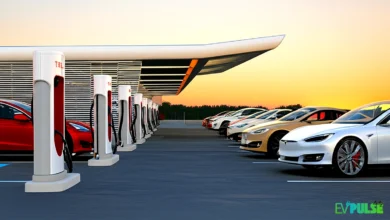
Charging infrastructure access varies dramatically by manufacturer. Tesla’s Supercharger network, now open to all EVs, provides superior highway charging convenience that should factor into purchase decisions. Read about Tesla Supercharger network access and its implications for non-Tesla owners.
Insurance costs have increased substantially for certain EV models, particularly luxury vehicles and those with expensive battery replacement exposure. The Tesla Model S and Model X, along with Lucid Air and Mercedes EQS, face annual premiums exceeding $3,500 for typical coverage.
Home charging installation requirements add $500-$2,500 in initial costs depending on existing electrical infrastructure. Learn about EV home charging installation costs and requirements. Buyers unable to install Level 2 charging face ongoing reliance on public infrastructure that increases operating costs.
Financing Strategies for the Price Crash Era
Current market conditions reward sophisticated buyers who understand financing nuances and manufacturer incentive structures. Several strategies maximize value capture during this unprecedented buyer’s market.
Manufacturer-subsidized financing often provides superior value compared to cash discounts. Tesla’s current 1.9% APR financing, for example, creates lower total ownership costs than equivalent cash discounts for buyers with strong credit profiles. Read about EV maintenance costs and long-term ownership economics.
Lease assumptions present unique opportunities as manufacturers subsidize residuals to maintain sales volumes. Current Tesla Model Y lease terms factor residual values near 65% after three years—generous assumptions that reduce monthly payments significantly. Check available EV tax credits and incentives that may further reduce costs.
Timing considerations suggest potential for further improvements. Traditional year-end clearance periods, typically October through December, may combine with ongoing market pressures to create exceptional opportunities. Learn about best electric cars 2026 for comprehensive model comparisons.
The Verdict: Strategic Buying in a Crash Market
The 2026 EV price crash creates unprecedented opportunities for informed buyers while presenting risks for those seduced by discounts without understanding underlying market dynamics. Vehicles from established manufacturers with proven service networks—specifically Tesla, Hyundai, Kia, and Ford—offer genuine value at current pricing levels.
Buyers should approach dramatically discounted models from struggling manufacturers with appropriate skepticism. The apparent savings on Fisker, Lucid, and certain luxury European models may evaporate through ownership complications, service difficulties, and depreciation that outpaces market norms.
For buyers considering electric vehicle adoption, 2026 represents a strategic inflection point where compelling values coexist with potential pitfalls. Success requires looking beyond transaction prices to evaluate total ownership costs, manufacturer viability, and infrastructure compatibility. For more market analysis, see our Tesla sales decline analysis and data from Torque News EV price analysis.
Are you planning to take advantage of 2026’s EV price crash, or are you waiting to see if prices drop further? Share your buying strategy below—timing insights help other readers navigate this unprecedented market.