The electric vehicle revolution has hit an inflection point. While EV sales continue climbing globally, one persistent concern keeps potential buyers on the fence: battery anxiety. Range limitations, charging times, and degradation fears have shadowed the industry since its inception. But behind closed laboratory doors, a technological breakthrough is finally ready for primetime. Solid-state batteries are no longer science fiction—they’re entering mass production, and 2026 will mark the year everything changes.
Why Current Lithium-Ion Batteries Are Hitting Their Ceiling
Today’s EVs rely predominantly on lithium-ion battery technology, a chemistry that has served us well but is approaching its theoretical limits. The liquid electrolyte inside conventional batteries creates inherent vulnerabilities. These volatile compounds can leak, catch fire under thermal stress, and require complex cooling systems that add weight and cost. Manufacturers have pushed lithium-ion to impressive heights—some EVs now claim 400+ mile ranges—but the incremental gains are becoming harder and more expensive to achieve.
Thermal runaway remains the industry’s dirty secret. When a traditional lithium-ion cell is punctured or overheats, the liquid electrolyte can ignite spectacularly. This risk necessitates heavy protective housings and sophisticated battery management systems. We’ve been optimizing around fundamental limitations rather than eliminating them.
The charging speed problem compounds these issues. Even the fastest DC fast chargers today take 20-30 minutes to deliver meaningful range. Push lithium-ion cells too hard, and you risk dendrite formation—microscopic lithium deposits that grow like stalactites inside the battery, eventually short-circuiting the cell.
The Solid-State Difference: A Fundamental Architecture Shift
Solid-state batteries replace the liquid electrolyte with a solid ceramic or glass compound. This seemingly simple change unlocks a cascade of advantages that transform every aspect of battery performance. Without volatile liquids, these cells are inherently safer. They can operate at higher temperatures without degradation. They resist physical damage better. And critically, they enable entirely new electrode materials that were chemically incompatible with liquid electrolytes.
The energy density improvements are staggering. Solid-state batteries can theoretically achieve 500-600 Wh/kg compared to the 250-300 Wh/kg typical of current lithium-ion packs. In practical terms, this means an EV with the same battery weight could double its range—or maintain current range with half the battery mass. For vehicle designers, this flexibility is revolutionary.
Toyota has invested over a decade researching solid-state technology and recently announced production readiness. Their prototypes have demonstrated charging from 10% to 80% in under 10 minutes—without the thermal management headaches that plague conventional batteries. Other manufacturers including QuantumScape, Solid Power, and Samsung SDI have made similar breakthroughs.
Manufacturing Challenges That Delayed the Breakthrough
If solid-state batteries offer such compelling advantages, why haven’t they arrived sooner? The answer lies in manufacturing complexity. Creating flawless solid electrolyte layers at scale proved maddeningly difficult. Even microscopic defects can create performance inconsistencies or premature failures.
The ceramic electrolyte materials require sintering—high-temperature processing that bonds particles into dense, uniform layers. Achieving this consistency across millions of cells while maintaining cost competitiveness challenged materials scientists for years. Traditional lithium-ion production lines couldn’t be easily retrofitted, requiring entirely new manufacturing infrastructure.
Cost parity presented another hurdle. Even with superior performance, solid-state batteries needed to approach the 00/kWh threshold that industry analysts consider the tipping point for mass EV adoption. Recent developments suggest this target is now achievable.
Which Manufacturers Are Leading the Charge
Toyota remains the most vocal proponent, promising solid-state-powered vehicles by 2027-2028 with limited production starting sooner. Their partnership with Panasonic gives them manufacturing scale that pure research firms can’t match. The Japanese giant has filed over 1,000 solid-state patents.
BMW and Ford have invested heavily in Solid Power, a Colorado-based startup that recently delivered EV-scale battery cells for automotive qualification testing. Their silicon nanowire anode technology promises even greater energy density. Mercedes-Benz has partnered with Factorial Energy, while Hyundai collaborates on dedicated solid-state platforms.
Chinese manufacturers aren’t standing idle. BYD and CATL have poured billions into solid-state research, recognizing that battery technology leadership determines automotive market dominance. CATL has announced semi-solid-state batteries as a stepping stone, gradually transitioning electrolyte composition while maintaining existing manufacturing lines.
What This Means for Current EV Owners
If you’re driving an EV purchased in the past few years, should you feel buyer’s remorse? Absolutely not. Solid-state batteries will initially appear in premium vehicles, just as lithium-ion technology first graced luxury EVs before filtering down to mass-market models. Early adopters of current-generation EVs have already contributed to emissions reductions and helped build the charging infrastructure that benefits everyone.
The transition will be gradual rather than instantaneous. Manufacturers will likely introduce solid-state options alongside improved lithium-ion variants for several years. Battery recycling infrastructure must scale dramatically to handle the influx of retired lithium-ion packs responsibly.
The Infrastructure Ripple Effects
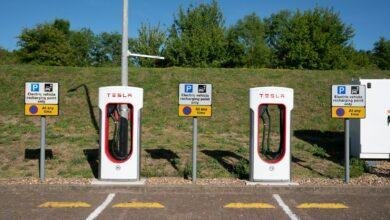
Faster-charging solid-state batteries will stress electrical grids differently than current EVs. While individual charging sessions will be shorter, the instantaneous power demands will be higher. Utilities and charging network operators must prepare for this evolution, upgrading transformer capacity and exploring on-site energy storage to manage peak loads.
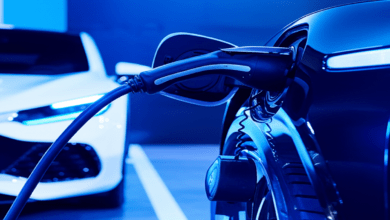
Charging connector standards may evolve as well. Current CCS and NACS connectors handle the power levels that solid-state batteries can accept, but thermal management at the connector interface becomes more critical. We may see liquid-cooled charging cables become standard even at lower-cost charging stations.
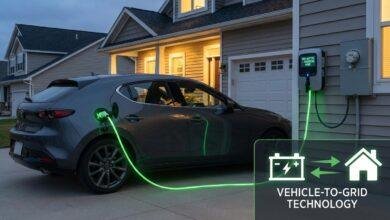
Home charging will transform too. Solid-state batteries tolerate faster charging without degradation, meaning overnight Level 2 charging becomes even more convenient. For apartment dwellers and urban residents without dedicated parking, workplace charging and public fast-charging become genuinely practical alternatives.
Environmental Considerations Beyond the Vehicle
The sustainability implications extend beyond tailpipe emissions. Solid-state batteries eliminate or significantly reduce cobalt requirements, addressing ethical concerns about mining practices in the Democratic Republic of Congo. The simplified cell architecture uses fewer materials overall, reducing manufacturing energy consumption and waste.
Recycling solid-state batteries may prove easier than their liquid-electrolyte counterparts. The stable solid materials withstand disassembly processes better, and the absence of flammable compounds simplifies transportation and processing.
Lifecycle carbon footprints should improve substantially. Manufacturing solid-state batteries requires less energy than traditional lithium-ion production, and their longer service life means fewer replacements over a vehicle’s lifespan.
What to Expect Next
2025 will bring limited commercial deployments, likely in luxury vehicles and specialized applications where cost matters less than performance. By 2026-2027, multiple manufacturers will offer solid-state options in mainstream segments. The technology will mature rapidly as production experience accumulates and manufacturing scales.
Battery swapping, which struggled to gain traction with current technology, may see renewed interest. Solid-state batteries’ longer lifespan and standardized form factors make swap stations more economically viable. Chinese companies like NIO have already demonstrated battery swapping at scale.
Frequently Asked Questions
Are solid-state batteries completely fireproof?
No battery is entirely fireproof, but solid-state batteries eliminate the flammable liquid electrolyte that causes thermal runaway in conventional lithium-ion cells. They can still overheat under extreme abuse, but they’re significantly safer.
Will solid-state batteries work in extreme cold?
Actually, solid-state batteries perform better in temperature extremes than liquid-electrolyte alternatives. The solid electrolyte maintains ionic conductivity at lower temperatures, reducing winter range loss.
How long will solid-state batteries last?
Early testing suggests solid-state batteries could maintain 80% capacity after 2,000+ charge cycles—potentially double the lifespan of current lithium-ion packs. This translates to 500,000+ miles of driving.
Can I upgrade my current EV to solid-state batteries?
Unfortunately, no. Solid-state batteries require different battery management systems, thermal management approaches, and physical packaging. They’re not drop-in replacements.
When will affordable EVs get solid-state batteries?
Mass-market adoption likely arrives around 2028-2030 as production scales and costs decrease. Premium vehicles will lead the transition.
Final Thoughts
Solid-state batteries represent more than an incremental improvement—they’re a foundational technology shift that removes the compromises inherent in current EVs. The combination of faster charging, longer range, improved safety, and extended lifespan addresses virtually every objection raised by EV skeptics over the past decade.
For the automotive industry, 2026 will be remembered as the year electric vehicles stopped apologizing for their limitations and started highlighting their advantages. The trajectory is unmistakable. The future of transportation is electric, and solid-state batteries are the catalyst that makes that future appealing to everyone.
If you’ve been waiting for the “right time” to go electric, you might want to start shopping seriously. By the time solid-state batteries become commonplace, the early learning curve will be behind us, charging infrastructure will be ubiquitous, and the environmental case will be undeniable.