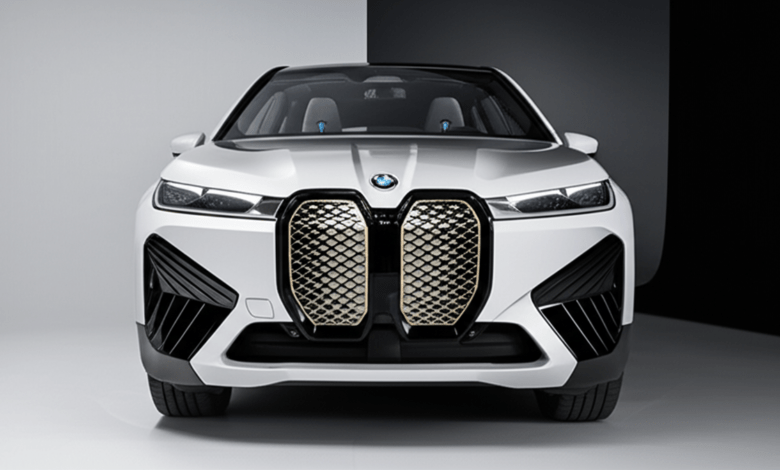
The BMW iX represents either the future of luxury motoring or an $87,000 question mark, depending on whom you ask. After spending two weeks with the 2026 bmw ix review unit, including highway road trips, city commuting, and everything between, I’m ready to answer whether this controversial electric SUV deserves your consideration—or your criticism.
BMW took risks with the iX. The polarizing grille design sparked immediate debate. The unconventional interior abandoned traditional luxury cues for something entirely different. And the pricing places it firmly in competition with established players like the Tesla Model X and Mercedes EQS SUV. But risk-taking sometimes produces brilliance, and after comprehensive testing, the iX reveals itself as one of the most compelling luxury EVs on the market—flaws and all.
Design: Love It or Hate It, You Won’t Ignore It
Approaching the bmw ix for the first time requires mental adjustment. BMW’s signature kidney grille, enlarged to cartoonish proportions and illuminated with LED lighting, dominates the front fascia. Traditionalists call it atrocious; progressives find it fascinating. After two weeks, I landed somewhere between acceptance and appreciation—it grows on you, especially at night when the lighting signature creates genuine presence.
The grille’s functional purpose extends beyond shock value. It houses radar sensors for advanced driver assistance systems, cameras for the 360-degree view, and cooling ducts for the battery thermal management system. The carbon fiber reinforced plastic body structure, visible in door sills and framework, represents Formula 1 technology adapted for production vehicles.
Rear styling proves most successful, with slim LED taillights and clean surfacing that photographs beautifully. The frameless windows and flush door handles contribute to a 0.25 drag coefficient—impressive for an SUV of this size. For buyers seeking distinction from the sea of anonymous crossovers, this counts as success.
Interior: A Radical Departure from BMW Tradition
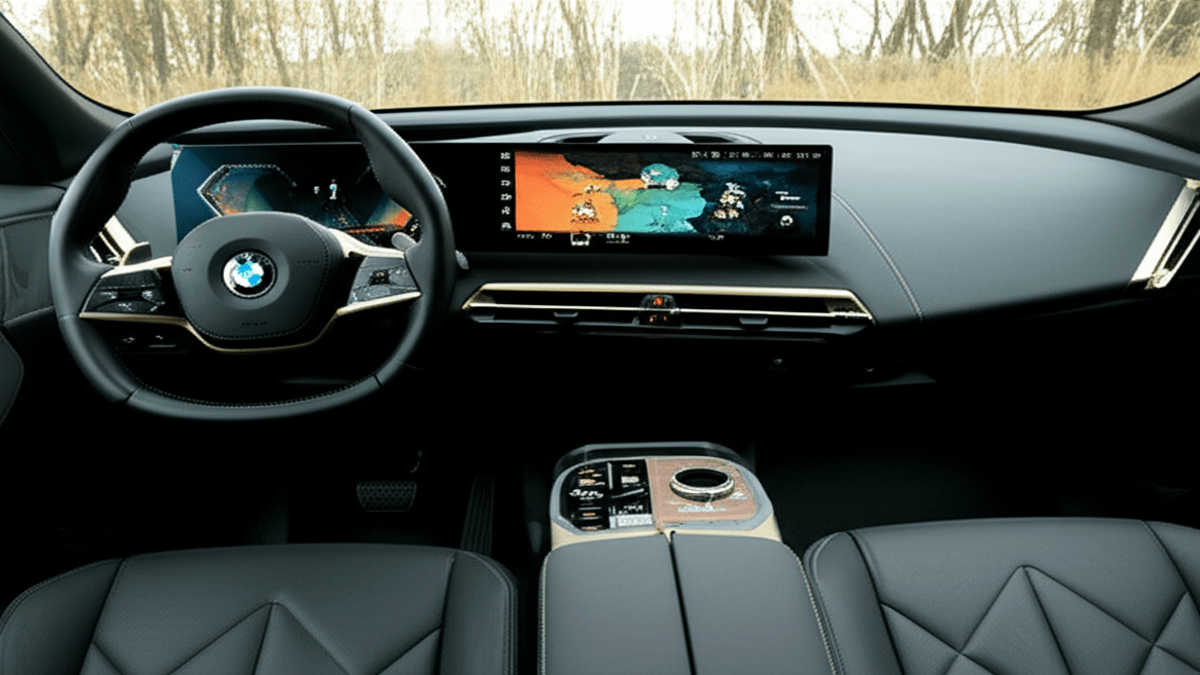
Open the door and the controversy continues. The Bmw iX interior abandons leather, wood, and chrome—the traditional luxury trifecta—for sustainable materials that challenge preconceptions about premium automotive interiors. BMW calls this approach “Shy Tech”—technology hidden until needed.
The curved display dominating the dashboard combines a 12.3-inch instrument cluster with a 14.9-inch infotainment screen under a single glass panel. Running BMW’s latest iDrive 8 software, the system responds quickly to inputs and displays gorgeous graphics. However, the learning curve proves steep—BMW buried essential functions in touchscreen menus where physical controls previously existed.
Space, however, impresses universally. The flat floor and long wheelbase create limousine-like rear legroom. The 77.9 cubic feet of cargo space with seats folded rivals full-size SUVs. A frunk adds an additional 4.7 cubic feet of storage—perfect for charging cables and emergency equipment.
Performance: Silently Spectacular
The xDrive50 model I tested produces 516 horsepower and 564 lb-ft of torque from dual electric motors—enough for 0-60 mph in 4.4 seconds. The M60 variant pushes this to 610 horsepower and 3.6 seconds, but honestly, the standard model already exceeds sane driving requirements.
More impressive than acceleration is the refinement. BMW engineered the iX with acoustic glass, foam-filled tires, and extensive sound deadening that creates an eerily silent cabin at highway speeds. Wind noise, normally the enemy of electric vehicles, remains remarkably absent even at 80 mph. This isolation transforms long drives from tiring to genuinely relaxing.
Handling surprises given the iX’s 5,700-pound curb weight. The low center of gravity, courtesy of the floor-mounted battery, minimizes body roll through corners. The air suspension adapts continuously to road conditions, providing comfort on rough surfaces without excessive float on smooth pavement.
Range and Charging: Competitive But Not Class-Leading
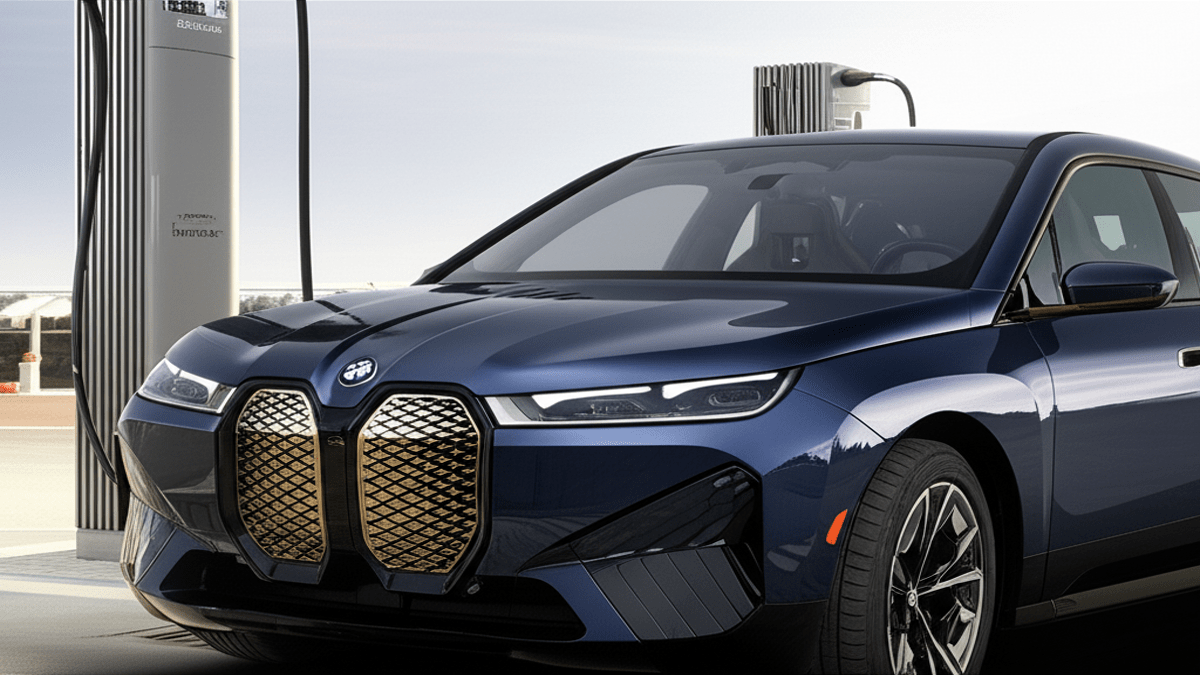
The EPA rates the Bmw iX xDrive50 at 324 miles of range—impressive but trailing the Tesla Model X’s 348 miles. In real-world testing, I achieved 290-310 miles depending on driving style and weather, aligning closely with EPA estimates.
The iX uses a 111.5 kWh battery pack (105.2 kWh usable)—one of the largest in the segment. BMW engineers prioritized battery longevity over maximum range, programming conservative charging limits that should extend pack life beyond 10 years. Learn more about EV battery technology in our battery warranty guide.
Charging speeds reach 195 kW DC fast charging, adding roughly 90 miles of range in 10 minutes under ideal conditions. This trails the 250+ kW capabilities of Tesla, Lucid, and Hyundai’s latest platforms but proves adequate for road trip convenience. Home charging using a Level 2 station replenishes the battery overnight—how most owners will charge 95% of the time.
Technology: Brilliant but Complicated
BMW packed the iX with technology, not all of it successfully implemented. The head-up display projects navigation, speed, and driver assistance information onto the windshield with impressive clarity. The Bowers & Wilkins Diamond surround sound system delivers concert-hall acoustics that justify its premium pricing—30 speakers and 1,615 watts create an immersive experience.
The iDrive 8 system represents BMW’s most ambitious software effort yet. Wireless Apple CarPlay and Android Auto come standard, connecting instantly without cable fumbling. The augmented reality navigation overlays directional arrows onto live camera feeds, making complex interchanges nearly impossible to miss.
Over-the-air update capability means these systems improve over time—my test vehicle received two software updates during the two-week loan, each addressing minor bugs and adding features. Check the EPA’s fuel economy website for official efficiency ratings.
Ownership Costs: Premium Purchase, Premium Upkeep
The 2026 BMW iX xDrive50 starts at $87,100, with my well-equipped test vehicle reaching $102,450 after options. This positions it against the Tesla Model X ($79,990-$94,990), Mercedes EQS SUV ($104,400-$125,950), and upcoming Lucid Gravity ($79,900-$130,000+).
Federal tax credits of $7,500 reduce effective pricing, though BMW’s North American assembly qualifies while some competitors face restrictions. State incentives vary but can add another $2,000-5,000 in savings depending on location.
Operating costs impress compared to gasoline luxury SUVs. Electricity costs roughly $0.04 per mile versus $0.15+ for comparable gas vehicles. At 12,000 miles annually, fuel savings exceed $1,300 yearly. However, insurance runs higher than average due to repair costs and aluminum-intensive construction.
Depreciation concerns loom for luxury EVs generally. Early iX models have held value reasonably well, retaining 65-70% of MSRP after two years, but the segment’s rapid evolution threatens long-term resale. Leasing might prove smarter than purchasing for buyers wanting the latest technology.
The Verdict
The BMW iX demands compromise from traditional luxury buyers while rewarding early adopters willing to embrace change. It prioritizes sustainability, space, and serene comfort over sporting dynamics and familiar controls. For buyers aligned with these priorities, it represents a compelling—if expensive—choice.
Against competitors, the iX offers superior interior space and material innovation compared to Tesla, lower pricing than Mercedes, and established dealer support that startups can’t match. However, it trails in charging network integration, software intuitiveness, and raw efficiency.
Ultimately, the iX succeeds as a statement vehicle for wealthy buyers wanting distinctive design and genuine sustainability credentials. It fails as a rational value proposition—$87,000 buys exceptional vehicles from multiple competitors. But rationality rarely drives luxury purchases, and the iX delivers emotional appeal that spec sheets can’t capture. Compare with other luxury EVs in our best electric cars 2026 rankings.
Would you spend $87,000 on the BMW iX, or does the Tesla Model X offer better value? Share your thoughts below—luxury EV choices reveal much about our priorities.