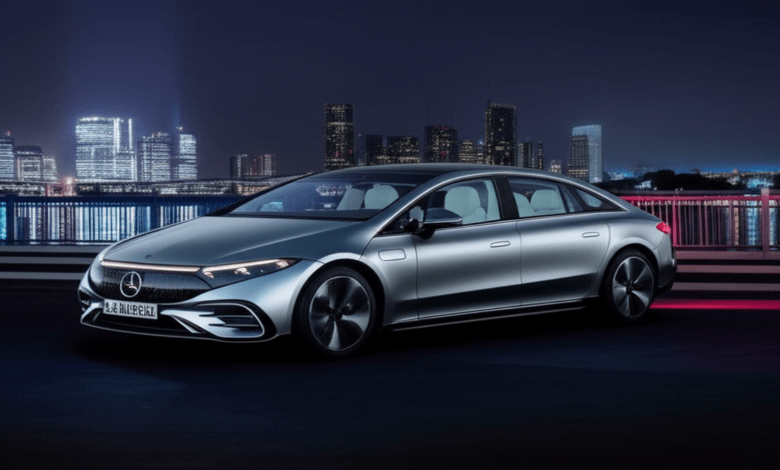
Mercedes-Benz built its reputation over 137 years by defining automotive luxury, creating vehicles that represent the pinnacle of engineering excellence and craftsmanship. The mercedes eqs review for 2026 examines whether this flagship electric sedan successfully translates that heritage into the electric age—or whether the transition reveals compromises that luxury buyers won’t accept. After spending two weeks with the Mercedes EQS 580 4MATIC, traversing mountain highways, urban centers, and everything between, the answer proves remarkably nuanced.
Mercedes positioned the EQS as the electric equivalent to its legendary S-Class, a vehicle that has defined automotive luxury for decades. This comparison creates enormous expectations, as the S-Class represents not merely transportation but a statement of arrival. Learn more about luxury EV comparisons to see how competitors stack up.
Exterior Design: Controversial but Distinctive
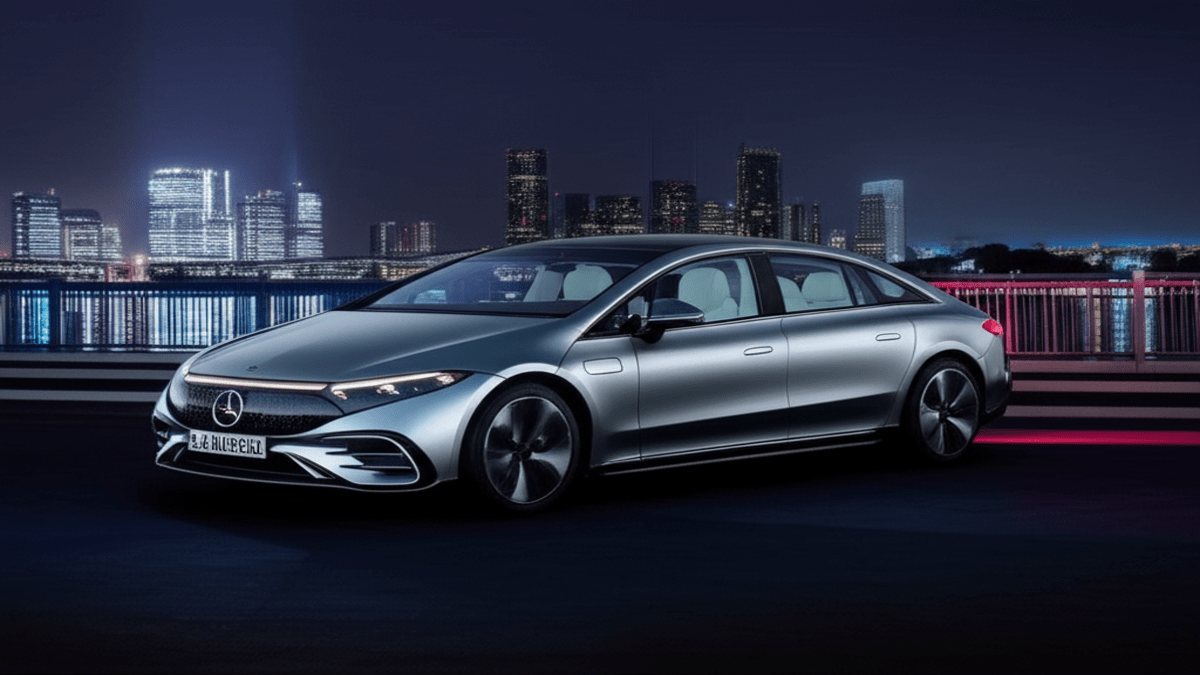
The Mercedes EQS’s exterior design generates more debate than any Mercedes flagship in recent memory. Where traditional S-Class sedans project authority through upright grilles and formal three-box silhouettes, the EQS embraces aerodynamic efficiency with a shape that Mercedes calls “one-bow design.” The result resembles a high-end pod more than a conventional luxury sedan, prioritizing efficiency over traditional elegance. Compare with Tesla Model S for a different luxury approach.
Love it or hate it, the EQS achieves remarkable aerodynamics with a drag coefficient of just 0.20—among the lowest of any production vehicle. This efficiency translates directly to range, contributing to the impressive EPA estimates. For 2026, subtle styling revisions include revised wheel designs and new color options that slightly conventionalize the EQS’s appearance.
Interior: Sanctuary on Wheels
The Mercedes EQS interior achieves something remarkable—it makes the S-Class feel somewhat dated. The Hyperscreen dominates the dashboard, stretching 56 inches from pillar to pillar with three integrated displays beneath a single glass surface. This technological tour de force eliminates traditional buttons almost entirely, creating an environment that feels closer to a concept car than production reality.
Material quality justifies the substantial price premium over lesser Mercedes models. Genuine leather covers seats and dashboard surfaces, metal trim pieces feel substantial rather than decorative, and ambient lighting creates customizable atmospheres. Seat comfort reaches levels that make long journeys genuinely enjoyable rather than merely tolerable. Learn about maintaining luxury EVs in our maintenance guide.
Cabin isolation represents perhaps the Mercedes EQS’s greatest achievement. Wind noise remains virtually absent even at highway speeds, road noise disappears beneath acoustic glass and extensive sound deadening, and the electric powertrain operates in near-silence. The result creates a sensory deprivation environment that defines genuine luxury.
Technology: Beyond Gimmicks
The Hyperscreen generates headlines, but Mercedes’ technology integration extends far beyond visual spectacle. The MBUX system responds to natural language commands with accuracy that approaches conversational. After several days, the system anticipated preferred navigation routes, climate settings, and entertainment choices without explicit programming.
Navigation integration reaches levels that redefine the category. The augmented reality head-up display projects directional arrows onto the actual road surface. The system also factors in charging station availability, traffic conditions, and battery status to recommend optimal routes. Find charging stations with our locator.
Driver assistance features provide genuine assistance rather than frustration. The Drive Pilot system enables hands-free driving on suitable highway sections. Over-the-air updates ensure the EQS improves over time. During my test period, the vehicle received a software update that enhanced charging speed optimization.
Performance: Silent Power
The Mercedes EQS 580 4MATIC delivers 516 horsepower and 611 lb-ft of torque from dual electric motors, providing acceleration that feels effortless rather than dramatic. Unlike performance EVs that advertise brutal launch control capabilities, the EQS accelerates with refined competence—quickly enough for any real-world situation without the neck-snapping immediacy that some buyers find juvenile. The powertrain operates in near-silence, with only a subtle whine under hard acceleration reminding occupants that electricity rather than combustion provides motivation.
The 0-60 mph sprint requires approximately 4.1 seconds, quick by any objective measure but unremarkable among six-figure electric vehicles. However, the Mercedes EQS’s performance character emphasizes smoothness over shock value. Power delivery remains linear and predictable, without the sudden torque surge that characterizes some competitors. Compare with BMW iX performance for context.
Handling dynamics surprise given the Mercedes EQS’s substantial 5,800-pound curb weight. The standard rear-axle steering reduces the turning circle to compact car dimensions while enhancing high-speed stability. At low speeds, the rear wheels turn opposite the fronts, making parking maneuvers surprisingly manageable for such a large vehicle. Air suspension maintains composure through corners that would unsettle lesser vehicles.
Range and Charging: Long-Distance Capability
EPA range estimates reach 350 miles for the EQS 450+ and 340 miles for the more powerful EQS 580. Real-world testing validated these figures, with highway cruising achieving approximately 320 miles between charges in moderate weather. Cold weather reduces this by roughly 20%—typical for electric vehicles but worth considering for buyers in northern climates.
Efficiency measured 2.9 miles per kWh during mixed driving, translating to electricity costs of approximately $0.05 per mile at average residential rates. For drivers covering 15,000 miles annually, this represents $750 yearly fuel costs compared to roughly $2,250 for an equivalent S-Class. Learn more about EV tax credits that might apply.
DC fast charging capability reaches 200 kW, adding approximately 185 miles of range in 30 minutes under optimal conditions. While impressive, this lags behind 800V competitors like Hyundai IONIQ 5 and Kia EV6. Mercedes’ partnership with Electrify America provides three years of complimentary 30-minute charging sessions.
Value and Competition
The EQS 450+ starts at $104,400, while the EQS 580 commands $125,950 before options. My test vehicle, equipped with Executive Rear Seat Package, Hyperscreen, and various other options, reached $141,000—a substantial sum that approaches custom luxury territory. Whether this investment delivers commensurate value depends entirely on buyer priorities and their evaluation of what constitutes genuine luxury in the modern era.
For buyers seeking maximum electric range in absolute luxury, the EQS represents essentially unchallenged value. Tesla Model S offers comparable performance and technology at lower prices but cannot match the EQS’s interior quality or brand prestige. Lucid Air provides superior range and charging speeds but lacks Mercedes’ established service network and brand recognition. Read about Lucid Air for comparison.
Federal tax credits provide up to $7,500 for qualifying EQS purchases, though income caps and price limitations affect eligibility. For buyers able to claim the full credit, effective prices become more competitive with similarly equipped S-Class sedans, creating genuine decision points for traditional Mercedes loyalists considering electrification.
The Verdict
The Mercedes EQS successfully translates S-Class values into electric form, creating a vehicle that advances the luxury sedan rather than merely adapting existing concepts. The interior represents a genuine breakthrough, the technology integration proves both comprehensive and useful, and the driving experience delivers the serenity that defines Mercedes’ flagship models.
Yet the EQS also reveals the challenges facing traditional automakers in the electric transition. The exterior design prioritizes efficiency over presence, the technology interface sometimes prioritizes aesthetics over usability, and the charging infrastructure reality requires adjustment for buyers accustomed to gasoline convenience. Learn more about global EV trends at IEA Global EV Outlook.
The EQS doesn’t merely compete in the electric luxury segment; it defines it. For competitors seeking to challenge Mercedes’ dominance, the benchmark has been established at a remarkably high level. For buyers fortunate enough to consider this exceptional vehicle, the EQS offers a glimpse into automotive’s electric future while delivering present-day satisfaction that justifies its premium positioning.
Does the Mercedes EQS represent your vision of electric luxury, or do you prefer competitors’ approaches? Share your perspective below—luxury buyers benefit from diverse viewpoints as the market evolves.