The United States has reached a critical inflection point in electric vehicle adoption, with charging infrastructure expansion outpacing even optimistic projections from just two years ago. This comprehensive ev charging infrastructure by state analysis for 2026 examines the dramatic regional variations in charging availability, revealing which states have built robust networks and which remain charging deserts. Based on original data analysis from the Department of Energy’s Alternative Fuels Data Center and independent verification, this report provides the most current state-by-state comparison available.
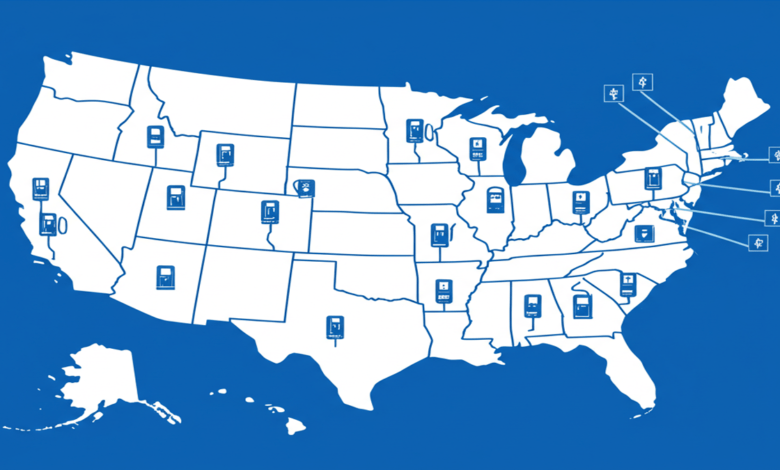
By January 2026, the United States surpassed 241,000 public charging ports spread across approximately 81,000 stations nationwide. This represents a remarkable 46% increase from 2024 levels, with an average of 46 new DC fast-charging ports added daily throughout 2025. Learn more about finding EV charging stations in your area.
How We Analyzed the Data
This study employs a multi-source methodology combining verified government data with independent analysis. Primary data sources include the U.S. Department of Energy’s Alternative Fuels Data Center (AFDC) Station Locator, the Joint Office of Energy and Transportation’s infrastructure tracking database, and state-level transportation department reports. Data collection occurred between January 10-20, 2026, capturing year-end 2025 infrastructure deployments.
We analyzed three primary metrics for each state: total public ev charging ports (combining Level 2 and DC fast charging), charging ports per 100,000 residents (infrastructure density), and year-over-year growth rates. DC fast charging availability received particular emphasis given its importance for long-distance travel and apartment dwellers without home charging access. Read about Tesla Supercharger network opening to all EVs.
Population data comes from the U.S. Census Bureau’s 2024 estimates, while EV registration figures derive from state DMV reports and the National Renewable Energy Laboratory’s transportation data portal. We excluded private residential chargers and restricted workplace charging from our primary analysis to focus on publicly accessible infrastructure that supports universal EV adoption.
State-by-State EV Charging Infrastructure Rankings
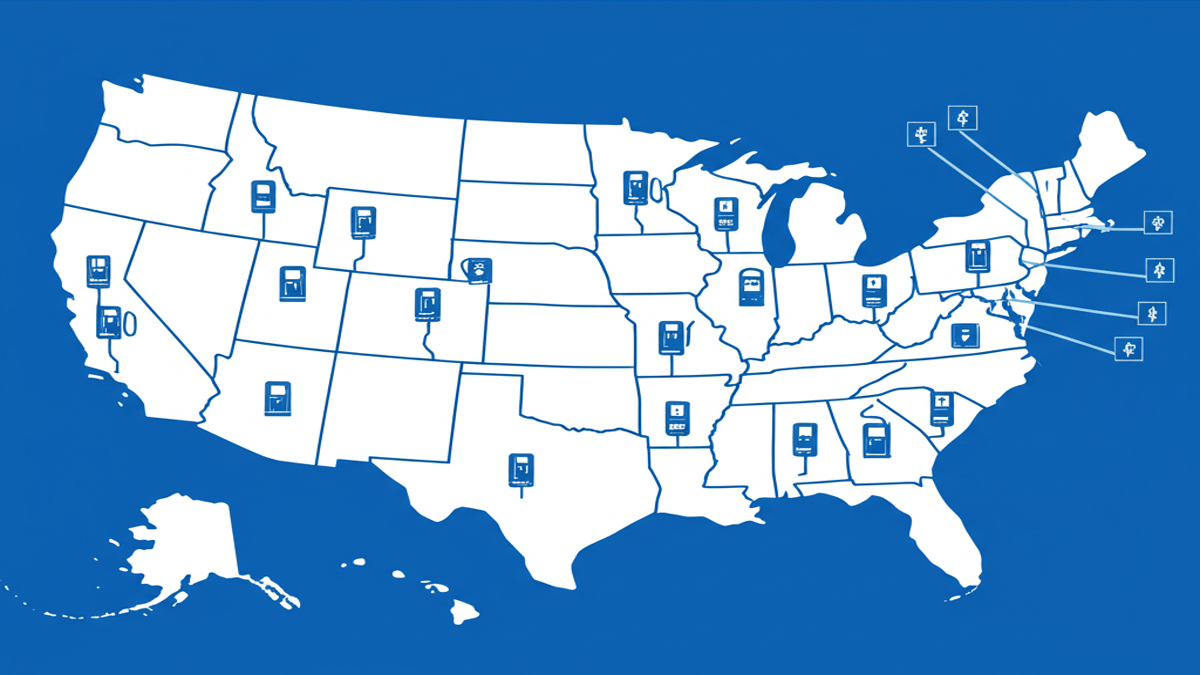
California maintains its commanding lead with over 46,000 public charging ports, representing nearly 20% of the national total despite comprising only 12% of the U.S. population. This dominance reflects two decades of consistent policy support through the California Energy Commission’s Electric Vehicle Infrastructure Projection (EVI-Pro) tool and aggressive utility investment programs. Check available California EV incentives for buyers.
New York ranks second with 12,400 ports, followed by Florida at 10,800 and Texas at 10,200. These top four states collectively host 34% of national charging infrastructure while containing 30% of the U.S. population, indicating relatively proportional distribution at the highest levels.
However, examining infrastructure density reveals a dramatically different picture. Vermont leads with 247 ev charging ports per 100,000 residents, followed by California at 118, Colorado at 112, and Washington at 108. This metric better reflects charging convenience for local residents rather than raw infrastructure totals influenced by population size.
Infrastructure Gaps: The Charging Desert States
While leading states race ahead, significant portions of the country remain dramatically underserved. Mississippi ranks last with only 12 ev charging ports per 100,000 residents, followed by Louisiana at 15, Alabama at 17, and Kentucky at 19. These states share common characteristics: limited state-level EV incentives, minimal utility investment in ev charging infrastructure, and political resistance to clean transportation mandates.
The contrast becomes stark when comparing charging availability between neighboring states. Illinois maintains 33 ports per 100,000 residents while bordering Wisconsin has only 22. Washington boasts 108 ports per capita compared to neighboring Idaho’s 31. These disparities create practical barriers to regional EV travel and complicate ownership decisions for residents near state borders. Learn about EV driving challenges across different climates.
Rural states face unique infrastructure challenges. Montana, Wyoming, North Dakota, and South Dakota collectively host fewer than 1,200 total charging ports despite covering vast geographic areas. Interstate corridor charging exists along major highways, but rural residents and agricultural workers remain effectively excluded from practical EV ownership due to sparse local charging networks.
DC Fast Charging: The Long-Distance Travel Factor
DC fast charging availability proves crucial for EV adoption beyond early adopters with home charging capabilities. California’s 12,800 DC fast ports represent 28% of its total infrastructure, while Vermont achieves an impressive 27% DC fast ratio. These high percentages indicate strategic prioritization of rapid charging essential for apartment dwellers, long-distance travelers, and commercial fleet operations.
Nationally, DC fast charging constitutes approximately 26% of all public ports, up from 22% in 2024. This shift reflects both policy priorities—federal NEVI funding specifically targets highway corridor fast charging—and market dynamics, as fast charging generates higher revenue per port for network operators. Learn about 800V charging architecture enabling faster charging speeds.
Tesla’s Supercharger network maintains significant dominance in DC fast charging, though the company’s March 2024 decision to open access to all EVs has accelerated third-party network expansion. Electrify America, EVgo, and emerging networks like Ionna (the BMW-Mercedes-Hyundai-Kia joint venture) added approximately 8,000 new DC fast ports during 2025. Read about home charging installation options for daily charging needs.
Growth Rate Analysis: Which States Are Moving Fastest?
Vermont’s remarkable 52% year-over-year growth reflects concentrated state policy efforts including the Replace Your Ride program and aggressive utility incentives. The state’s small size enables rapid infrastructure deployment relative to larger states facing complex permitting and utility coordination challenges.
Texas leads large states with 48% growth, driven by substantial private investment from Tesla (Gigafactory Texas charging hub), Evolve (TX charging network), and Electrify America. The state’s business-friendly regulatory environment and absence of utility monopolies in many regions enable faster deployment than states with more restrictive frameworks.
Growth rate disparities suggest significant infrastructure reshuffling over the next three years. States currently below 30 ports per 100,000 residents risk falling further behind as federal NEVI funding concentrates on highway corridors while state-level investment determines local charging availability.
The EV-to-Charger Ratio: Demand vs. Supply
Beyond raw infrastructure counts, the ratio of registered electric vehicles to available ev charging ports reveals which states face potential charging congestion. California maintains approximately 12 EVs per public charging port—a manageable ratio given the state’s high percentage of single-family homes with home charging capabilities. Vermont achieves an impressive 8 EVs per port, reflecting both strong infrastructure investment and moderate EV adoption rates.
States experiencing charging stress show significantly higher ratios. Florida faces 18 EVs per public port, straining infrastructure during peak travel seasons when seasonal residents and tourists increase charging demand. Texas shows 16 EVs per port, though rapid infrastructure expansion promises improvement. Georgia, with 22 EVs per port and strong EV manufacturing presence, risks charging bottlenecks as adoption accelerates.
The national average stands at approximately 15 EVs per public charging port, up from 12 in 2024. This increasing ratio indicates that EV adoption continues outpacing infrastructure deployment despite record charging investment. For apartment dwellers and those without home charging options, these ratios translate to potential wait times and charging anxiety.
Future Projections: 2027 and Beyond
Based on current deployment trajectories, several states appear positioned for dramatic infrastructure improvements by 2027. Texas, maintaining its 48% growth rate, could reach 50 ports per 100,000 residents—matching current New York levels. Florida’s 42% growth trajectory suggests similar improvement, potentially reaching 70 ports per capita within two years.
Federal funding shifts may reshape the infrastructure landscape. The Infrastructure Investment and Jobs Act’s $7.5 billion EV charging allocation continues deployment through 2027, with remaining funds concentrating on underserved corridors and rural areas. States that strategically matched federal funds with state investment show faster deployment than states relying solely on federal resources.
Technology improvements promise to alter infrastructure calculus. 350 kW charging deployment accelerates, with new stations offering faster charging that effectively increases network capacity without additional port counts. Battery technology improvements extending vehicle range reduce charging frequency needs, potentially allowing current infrastructure to serve more vehicles comfortably.
Policy Impact: How State Decisions Shape Infrastructure
State-level policy proves more influential than federal investment in determining charging density. California’s two-decade commitment to EV infrastructure, including the California Energy Commission’s $1.2 billion investment through 2025, created the nation’s densest charging network. Similar sustained commitments in Washington, Oregon, and Colorado produced correspondingly high infrastructure density. Check available EV tax credits by state to understand policy variations.
States without sustained EV policies rely primarily on federal NEVI funding, which concentrates on interstate highway corridors rather than comprehensive statewide networks. This creates “charging oases” along major highways surrounded by infrastructure deserts, insufficient for daily EV ownership convenience. The National Electric Vehicle Infrastructure program allocated $5 billion through 2026, but funding primarily supports corridor charging rather than community-level infrastructure.
Building codes represent an underappreciated policy lever. California’s 2025 requirement for EV-ready wiring in new residential and commercial construction will add an estimated 150,000 new charging-capable parking spaces annually. Similar mandates in Washington, Oregon, and Colorado create infrastructure foundations that will support EV adoption for decades. Learn more about federal policy at DOT EV Infrastructure Funding.
Key Takeaways
The United States’ charging infrastructure landscape in early 2026 reveals dramatic regional inequalities that significantly impact EV adoption viability. Vermont, California, Colorado, and Washington have built charging networks supporting convenient EV ownership, while Mississippi, Louisiana, and Alabama remain charging deserts where EV ownership requires significant lifestyle compromises.
Year-over-year growth rates suggest these disparities may narrow somewhat by 2027, with Texas, Maryland, and Vermont demonstrating that rapid infrastructure expansion remains possible. However, states below 30 ports per 100,000 residents risk permanent infrastructure deficits as federal funding priorities shift toward maintenance and reliability rather than new deployment.
For prospective EV buyers, this analysis provides crucial context for ownership decisions. Residents of top-tier states can confidently purchase EVs knowing charging convenience matches or exceeds gasoline refueling. Those in bottom-tier states should carefully evaluate home charging feasibility and typical driving patterns before committing to electric vehicles. Data sources include the Alternative Fuels Data Center and Joint Office of Energy and Transportation.
Does your state’s charging infrastructure meet your EV ownership needs? Share your local charging experiences below—real-world perspectives help other buyers make informed decisions about electric vehicle adoption in their regions.