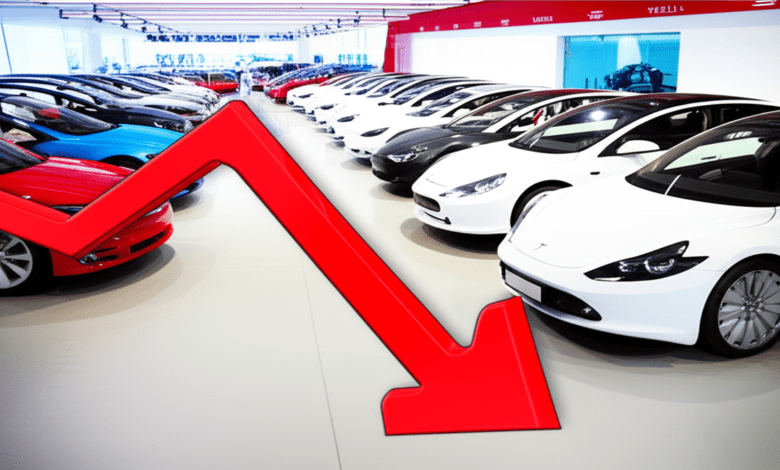
Tesla’s dominance of the American electric vehicle market is facing its most significant challenge since the Model S first proved EVs could compete with luxury sedans. New registration data reveals that tesla sales decline accelerated dramatically in January 2026, with US deliveries falling an estimated 17% year-over-year according to Motor Intelligence. The automaker moved approximately 40,100 vehicles during the month, down from 48,500 in January 2025—marking the fourth consecutive month of declining domestic demand.
This deterioration extends beyond American borders. Tesla’s European registrations collapsed 88% in Norway, plunged 57% in the United Kingdom, and showed significant weakness across Germany, France, and the Netherlands. Globally, Tesla’s Q4 2025 deliveries fell 15% year-over-year, confirming that the company’s growth story has fundamentally shifted from expansion to contraction.
The January 2026 Numbers: A Closer Look
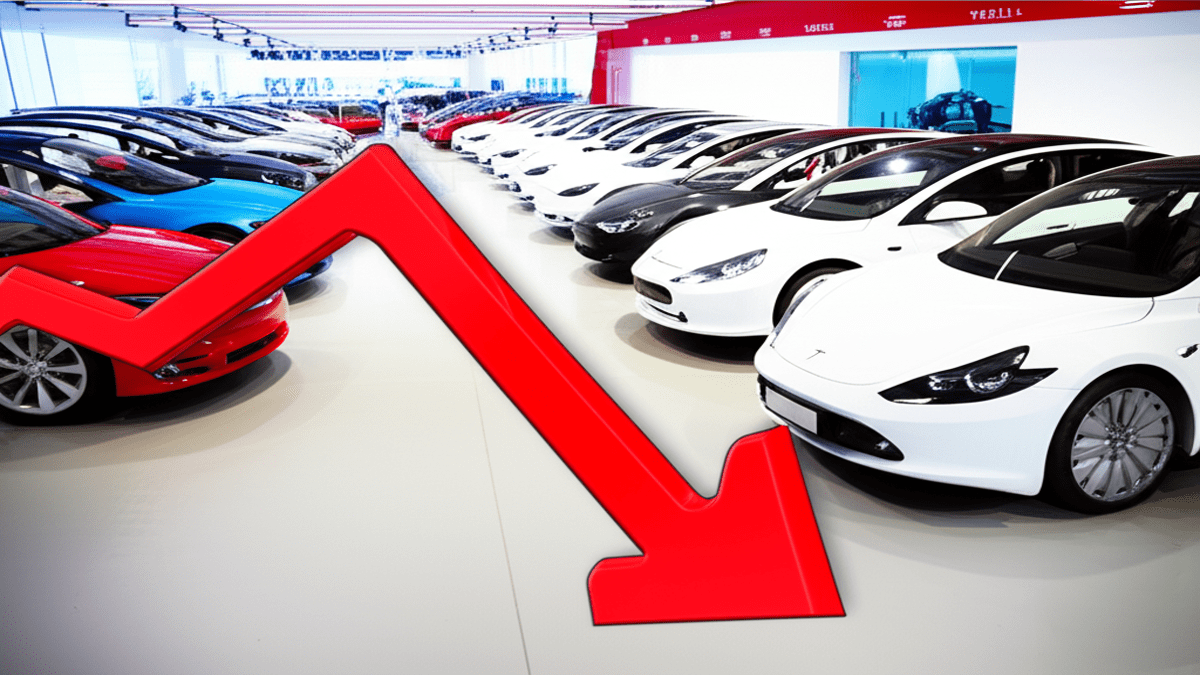
Tesla’s estimated 40,100 US registrations in January 2026 represent the company’s weakest January performance since 2021. The 17% year-over-year decline significantly outpaced the broader EV market’s 12% contraction, indicating Tesla-specific challenges beyond general market conditions. Learn about EV price parity and market dynamics.
Model-level breakdowns reveal where Tesla is losing ground most acutely. The Model 3 experienced the steepest decline at approximately 24%, reflecting intensifying competition from the Hyundai IONIQ 5 and Kia EV6. The Model Y crossover declined 15%—still substantial but somewhat buffered by its dominance in the compact SUV segment.
Factor 1: The End of Federal Tax Credits
The most immediate cause of Tesla’s January 2026 sales decline traces to federal policy changes that eliminated the $7,500 EV tax credit for Tesla vehicles. The Inflation Reduction Act’s domestic content requirements, fully implemented on January 1, 2026, disqualified Tesla’s entire lineup due to battery sourcing restrictions and price caps that the company’s vehicles exceed.
This policy shift fundamentally altered Tesla’s value proposition. A Model Y Long Range that cost $48,990 after credits in December 2025 suddenly required $54,990 in January 2026—a 12% effective price increase. Check EV tax credits guide for current eligibility.
Competitors capitalized immediately. Hyundai, Kia, and Ford prominently advertised their continued eligibility for federal credits, creating effective price advantages of $7,500 or more against comparable Tesla models.
Factor 2: Intensifying Competition
While Tesla historically competed primarily against gasoline vehicles, January 2026 marked the first month where Tesla faced meaningful competition from multiple established EV rivals across all price segments. The BYD US market entry adds additional pressure with aggressive pricing.
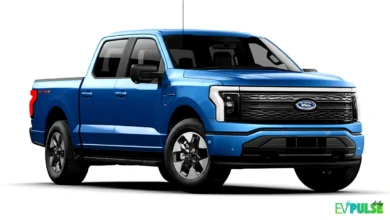
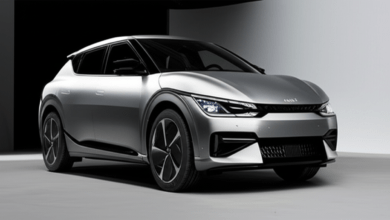
In the compact SUV segment, the Model Y now competes against the Hyundai IONIQ 5, Kia EV6, and Ford Mustang Mach-E. Each competitor offers comparable range, superior build quality, and significantly lower prices when federal tax credits are considered. The IONIQ 5 gained substantial market share in January, with US sales increasing 34% year-over-year while Tesla declined.
Luxury competition has intensified most dramatically. The BMW iX, Mercedes EQS, and Lucid Air have collectively captured significant market share from the Model S and Model X. Read Lucid Air Sapphire performance analysis.
Factor 3: Product Aging and Update Delays
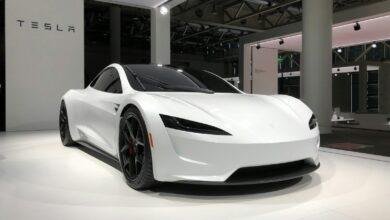
Tesla’s product lineup, revolutionary when introduced, increasingly appears dated against refreshed competition. The Model S and Model X platforms launched in 2012 and 2015 respectively, receiving only minor updates rather than comprehensive redesigns. Learn about Tesla Model 3 Highland updates and whether they address aging concerns.
Missing from Tesla’s lineup entirely are critical market segments. The company offers no compact or subcompact EVs to compete with the Chevrolet Bolt or Nissan Leaf. Tesla’s promised $25,000 vehicle remains indefinitely delayed, ceding the entry-level market to competitors.
Factor 4: Brand Perception Shifts
Beyond product and pricing challenges, Tesla faces evolving brand perception that increasingly alienates potential buyers. Elon Musk’s political activities and social media presence have created significant brand polarization, particularly among environmentally conscious consumers who historically formed Tesla’s core customer base.
Quality concerns, long dismissed by Tesla loyalists, have gained mainstream recognition. The company’s consistently poor rankings in J.D. Power quality studies and Consumer Reports reliability data increasingly influence purchase decisions. Check EV maintenance costs and service considerations.
The company’s direct-sales model, once an advantage, now appears as a liability as service waits extend for months. Traditional dealerships provide immediate service access that Tesla’s app-based system increasingly frustrates.
The Global Context: Tesla’s Worldwide Struggles
While this analysis focuses on American market dynamics, Tesla’s January 2026 difficulties reflect global challenges. China, Tesla’s second-largest market, showed concerning weakness as domestic competitors BYD, NIO, and Xpeng gained market share.
Europe’s dramatic declines—particularly Norway’s 88% collapse—reflect both incentive changes and competitive pressure. European consumers enjoy greater EV choice than Americans, with Volkswagen Group and Hyundai-Kia offering comprehensive lineups that Tesla’s aging models struggle against.
Key Takeaways
Tesla’s 17% January 2026 sales decline represents confluence of policy changes, competitive evolution, product aging, and brand challenges that collectively erode the company’s market position. The single largest factor—federal tax credit elimination—created immediate price pressure that competitors exploited effectively.
For prospective EV buyers, Tesla’s struggles create advantageous market conditions. Increased inventory and price reductions offer opportunities for value-conscious purchasers. However, buyers should carefully evaluate whether Tesla’s technology advantages justify pricing that increasingly exceeds comparable alternatives.
The broader EV market implications prove more significant than Tesla-specific concerns. Tesla’s decline demonstrates that EV demand has matured beyond early adopter enthusiasm into mainstream purchasing decisions where traditional automotive factors dominate. For more market analysis, see our EV charging infrastructure analysis and data from Electrek’s Tesla sales report.
Would you still choose Tesla over competitors given recent price increases and quality concerns, or has Tesla lost its competitive edge? Share your perspective below—buyer priorities help others navigate an increasingly competitive EV marketplace.