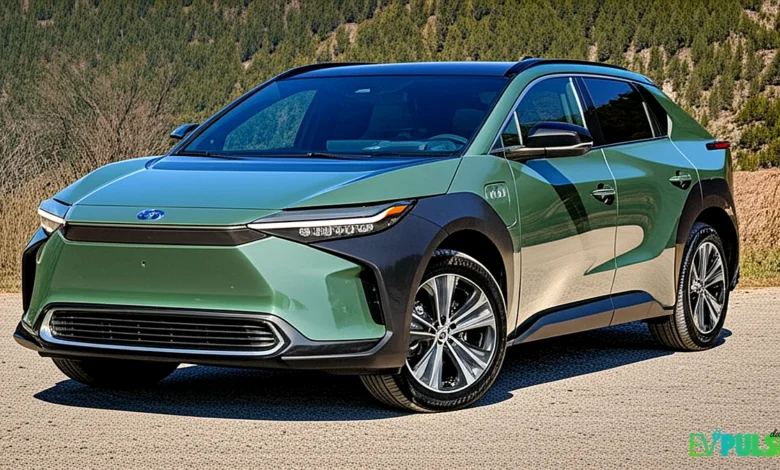
Toyota has unveiled the production-ready toyota bz woodland 2026, delivering the first electric vehicle from the Japanese giant that genuinely competes for adventure-seeking buyers rather than merely satisfying compliance requirements. With 375 horsepower, standard all-wheel-drive featuring Toyota’s legendary X-MODE system, and a 281-mile EPA range rating, the bZ Woodland represents Toyota’s serious entry into the electric SUV market when it arrives at dealerships in March 2026.
The toyota bz woodland 2026 announcement signals Toyota’s acknowledgment that electric vehicles must offer genuine capability rather than just efficiency credentials. Built on the company’s dedicated e-TNGA platform, this midsize electric SUV targets outdoor enthusiasts who refuse to compromise adventure access for environmental consciousness. The combination of robust off-road hardware, substantial power output, and competitive pricing positions the bZ Woodland as a compelling alternative to established players like the Ford Mustang Mach-E and Volkswagen ID.4. Learn how Ford’s electric truck strategy compares with Toyota’s SUV approach.
Powertrain and Performance Credentials
The toyota bz woodland 2026 powertrain represents significant advancement over Toyota’s previous electric offerings. Dual permanent magnet synchronous motors—one at each axle—deliver combined output of 375 horsepower and 402 lb-ft of torque. These figures substantially exceed the bZ4X’s 214 horsepower, demonstrating Toyota’s recognition that electric SUV buyers increasingly demand performance alongside efficiency.
Acceleration performance impresses for a vehicle targeting adventure utility rather than sports car credentials. The toyota bz woodland 2026 achieves 0-60 mph in 5.2 seconds according to Toyota’s preliminary testing—competitive with gasoline-powered performance SUVs while delivering the instant torque response that defines electric drivetrains. Top speed reaches 112 mph, electronically limited to preserve range rather than mechanical constraints.
Towing capability addresses practical adventure needs often overlooked by electric SUV competitors. The toyota bz woodland 2026 manages 3,500 pounds when properly equipped, sufficient for small campers, boats, or utility trailers that enable weekend adventures. This capacity matches the Ford Mustang Mach-E and exceeds the Volkswagen ID.4’s 2,700-pound rating, providing genuine utility for outdoor enthusiasts. Compare Kia EV9 towing capabilities with Toyota’s offering.
Battery technology employs Toyota’s latest lithium-ion cells with enhanced nickel-cobalt-manganese chemistry. The 87 kWh usable capacity provides the foundation for the bZ Woodland’s 281-mile EPA range rating while maintaining charging speeds competitive with segment leaders. Official EPA fuel economy ratings confirm these efficiency figures. Toyota’s battery management system prioritizes longevity over maximum performance, with the company projecting 90% capacity retention after 10 years of typical use—a claim few competitors match. Explore battery longevity analysis for EV ownership planning.
X-MODE and Off-Road Capability
The standard X-MODE system distinguishes the toyota bz woodland 2026 from electric SUV competitors that treat all-wheel-drive as merely a traction aid for inclement weather. Derived from Toyota’s legendary off-road hardware in the 4Runner and Land Cruiser, X-MODE integrates throttle mapping, traction control, and brake-based torque vectoring to maximize capability on challenging terrain.
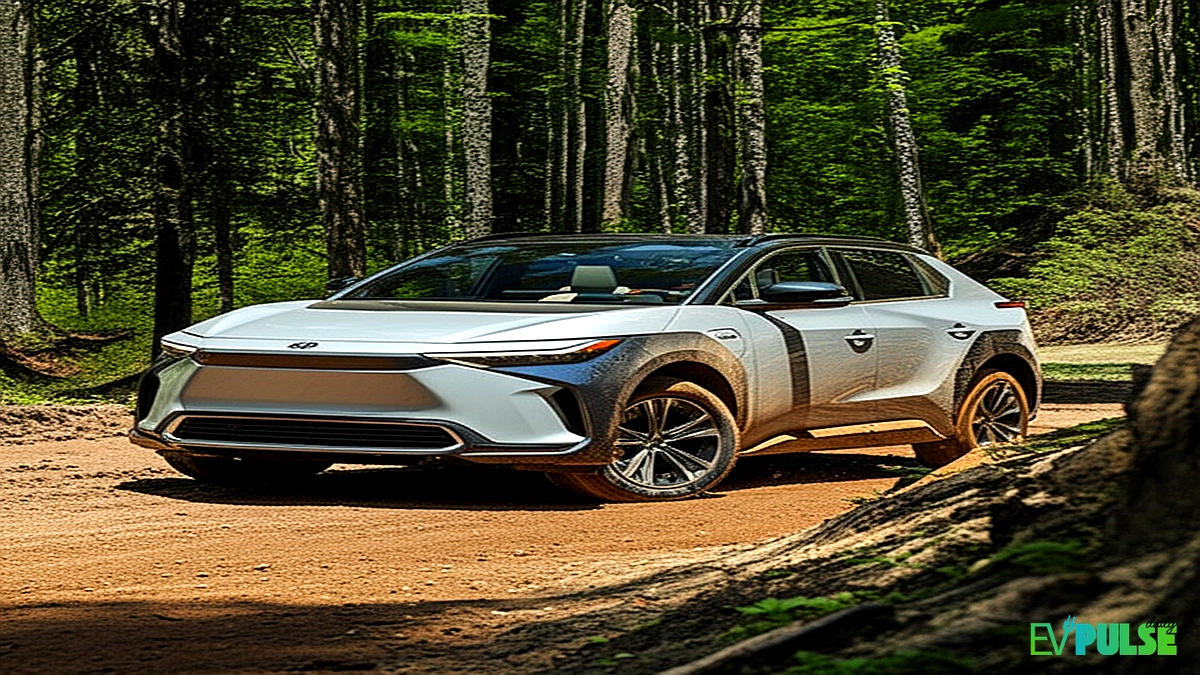
Multiple terrain modes adapt the toyota bz woodland 2026 for specific conditions. SNOW mode prioritizes stability on slippery surfaces, DIRT optimizes traction on loose terrain, and MUD/SAND maintains momentum in low-traction environments. A unique ROCK mode—rare in the electric SUV segment—enables precise throttle control for technical climbing, utilizing the electric motors’ instant torque delivery to maintain traction where gasoline engines would falter.
Ground clearance of 8.3 inches exceeds the Ford Mustang Mach-E’s 5.7 inches and matches Subaru’s adventure-focused Solterra. Approach, departure, and breakover angles of 19.8, 21.0, and 16.4 degrees respectively enable confident navigation of moderate trails without the anxiety that plagues lower-slung electric SUVs. Toyota’s skid plate protection for the battery pack and front motor addresses the vulnerability concerns that deter off-road enthusiasts from electric vehicles.
Regenerative braking systems present unique challenges for off-road operation, but Toyota’s engineers addressed these concerns comprehensively. The toyota bz woodland 2026 allows complete regenerative braking deactivation via steering wheel paddles, enabling traditional off-road driving techniques where controlled wheel slip aids traction. Hill descent control utilizes electric motor braking rather than friction brakes, maintaining consistent speeds on steep grades without brake fade concerns. Technical specifications from Toyota’s official electrified vehicles page detail the complete X-MODE system.
Range, Charging, and Real-World Efficiency
The toyota bz woodland 2026 achieves 281 miles of EPA-estimated range—a figure that positions it competitively within the midsize electric SUV segment. This rating applies to the standard 19-inch wheel configuration; optional 20-inch wheels reduce range to 267 miles due to increased rolling resistance and aerodynamic disruption. Toyota’s conservative estimation methodology suggests real-world range may exceed EPA figures under moderate driving conditions.
Cold weather performance addresses the range anxiety that plagues northern climate EV adoption. The toyota bz woodland 2026 employs a heat pump system that maintains cabin comfort while preserving battery range more effectively than resistance heating. Toyota’s preliminary testing demonstrated 225 miles of range at 14°F—substantially better than competitors lacking heat pump technology. Pre-conditioning capability allows owners to warm the battery and cabin while connected to charging, maximizing available range at departure.
DC fast charging capability enables practical long-distance travel despite the toyota bz woodland 2026‘s adventure positioning. Maximum charging rates of 150 kW deliver 10-80% battery replenishment in approximately 32 minutes at compatible stations. While not class-leading compared to 800V architecture competitors, this capability supports reasonable road trip pacing with charging stops every 200-250 miles. The Toyota app provides real-time charging station availability and preconditioning activation, reducing range anxiety through information transparency.
Bidirectional charging capabilities debut on the toyota bz woodland 2026, enabling vehicle-to-home (V2H) and vehicle-to-load (V2L) functionality. The 3.6 kW onboard inverter can power essential home appliances during outages or run camping equipment at remote locations for extended periods. This feature, standard on all trim levels, matches capabilities offered by Ford’s F-150 Lightning and Hyundai’s Ioniq 5, providing genuine utility beyond transportation. Review NACS charging compatibility for infrastructure planning.
Interior Design and Technology Integration
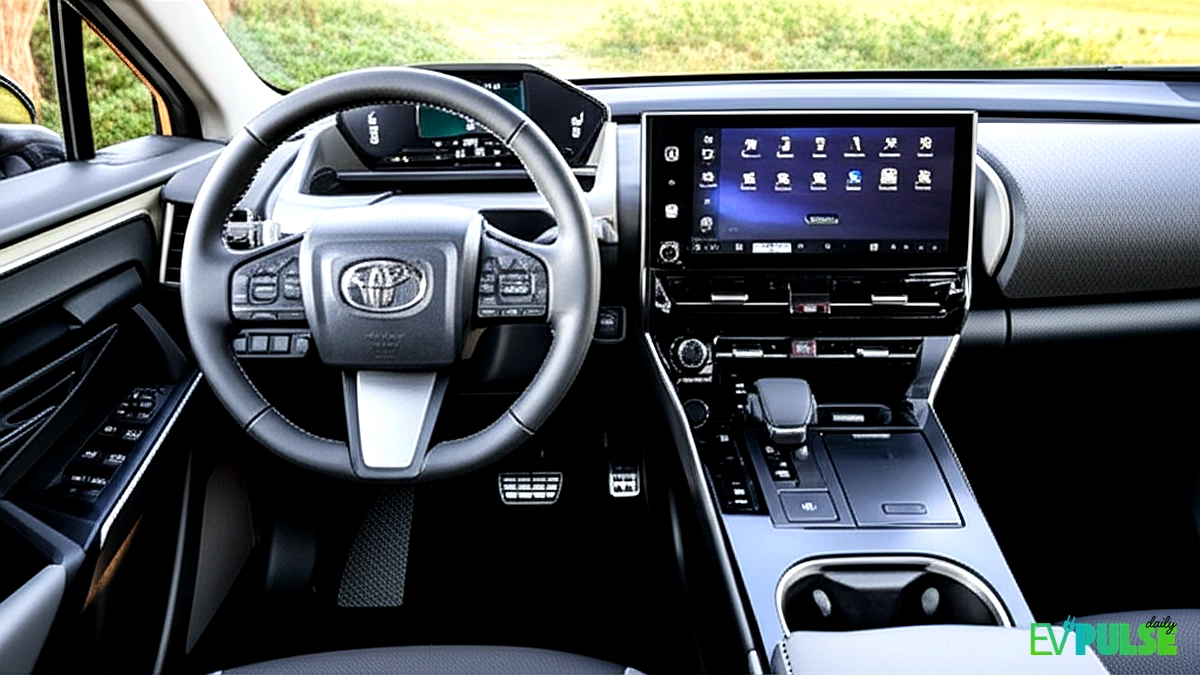
The toyota bz woodland 2026 interior balances rugged durability with technology integration appropriate for its adventure positioning. Soft-touch surfaces cover primary touch points, while washable synthetic leather upholstery withstands muddy gear and wet equipment that would damage more delicate materials. Rubberized flooring with removable cargo mats acknowledges that this vehicle will encounter conditions that would horrify typical SUV owners.
The 14-inch touchscreen dominates the dashboard, running Toyota’s latest Audio Multimedia system with wireless Apple CarPlay and Android Auto. Physical controls for climate and volume functions acknowledge that touchscreen-only interfaces prove frustrating while wearing gloves or during off-road bouncing. Compare with Tesla’s touchscreen-only approach. The toyota bz woodland 2026 includes wireless device charging, multiple USB-C ports, and 120V household outlets in both front and rear seating areas—thoughtful details for device-heavy adventures.
Digital instrument cluster customization allows drivers to prioritize information relevant to current conditions. Off-road displays show pitch, roll, and individual wheel traction; efficiency modes emphasize range and energy consumption; and traditional gauge layouts accommodate conventional preferences. The head-up display—available on higher trims—projects speed, navigation, and X-MODE status onto the windshield, minimizing eyes-off-road time during technical driving.
Cargo capacity of 56.9 cubic feet with rear seats folded accommodates substantial adventure gear, though the toyota bz woodland 2026‘s sloping roofline reduces maximum volume compared to boxier competitors. See Chevrolet Equinox EV cargo space for comparison. Under-floor storage compartments provide secure, dry space for recovery equipment and tools that would clutter the main cargo area. Roof rails rated for 165 pounds enable kayak, bike, or cargo box mounting for extended adventures. Explore home charging solutions for adventure vehicle owners.
Pricing Structure and Market Positioning
Toyota has priced the toyota bz woodland 2026 aggressively, with the base LE trim starting at $42,995 before federal tax incentives. This positioning undercuts the Ford Mustang Mach-E GT by $8,000 and the Kia EV6 GT by $12,000 while offering comparable performance and superior off-road capability. The value proposition strengthens considerably when federal tax credits are applied.
The mid-range XLE trim at $47,995 adds the larger 14-inch touchscreen, wireless device charging, and heated synthetic leather seats. XLE Premium models at $52,995 include the head-up display, panoramic glass roof, and 20-inch wheels. The range-topping Limited at $58,995 adds premium audio, ventilated seats, and Toyota’s most comprehensive safety package. All trim levels include X-MODE as standard equipment—Toyota refuses to reserve off-road capability for expensive variants.
Federal tax credit eligibility significantly impacts effective toyota bz woodland 2026 pricing. Assembled at Toyota’s Princeton, Indiana facility with battery components from Toyota’s North Carolina plant, the bZ Woodland qualifies for the full $7,500 federal credit. This reduces base LE pricing to $35,495—competitive with gasoline-powered Toyota Highlanders while offering substantial operational cost savings. State incentives in California, Colorado, and Oregon provide additional reductions that can bring effective pricing below $30,000.
Operating cost calculations favor the toyota bz woodland 2026 against gasoline-powered adventure vehicles. At 15,000 annual miles with electricity costs averaging $0.13 per kWh, annual fuel expenses approximate $650 versus $2,800 for a Toyota 4Runner achieving 20 MPG combined. Reduced maintenance requirements—no oil changes, fewer brake replacements, simplified drivetrain—add approximately $400 annual savings. These economics make the bZ Woodland financially advantageous within three years despite higher initial purchase price. Compare total cost of ownership calculations.
The Verdict
The toyota bz woodland 2026 represents Toyota’s genuine commitment to electric vehicles that satisfy enthusiast expectations rather than merely checking regulatory boxes. The combination of substantial power, legitimate off-road capability through X-MODE, and competitive pricing creates compelling value for adventure-seeking buyers who previously found electric SUVs compromised for their use cases.
For outdoor enthusiasts, the bZ Woodland eliminates the range anxiety and capability concerns that prevented electric vehicle adoption. The 281-mile range accommodates weekend adventures without charging anxiety, while X-MODE hardware provides confidence on forest service roads and moderate trails. Bidirectional charging extends self-sufficiency at remote campsites, enabling extended off-grid experiences.
Toyota’s reputation for reliability and dealer network coverage provide peace of mind that newer EV-only brands cannot match. The comprehensive 10-year/150,000-mile battery warranty—longer than most competitors—addresses long-term ownership concerns that deter buyers from emerging manufacturers. For buyers seeking electric adventure without compromise, the toyota bz woodland 2026 delivers genuine capability at compelling value.