The electric vehicle revolution has reached a tipping point where affordability no longer requires compromise. The cheapest electric car options for 2026 deliver impressive range, modern technology, and practical utility at price points that compete directly with gasoline vehicles. With federal tax credits up to $7,500 and state incentives reducing costs further, budget-conscious buyers can now access zero-emission transportation without breaking the bank.
1. Nissan Leaf S: The Original Affordable EV
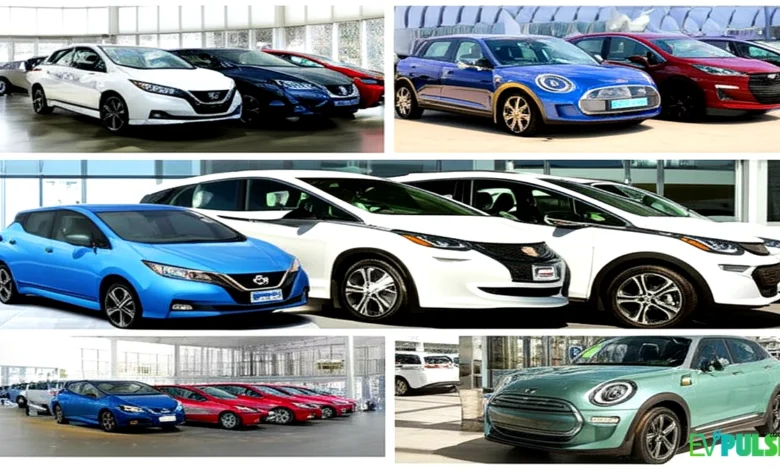
The Nissan Leaf S continues defending its position as the cheapest electric car available in the United States. Starting at $28,140 before federal tax credits, the Leaf drops to an impressive $20,640 after the $7,500 federal incentive—making it cheaper than most gasoline-powered compact cars. The 2026 Leaf S delivers 149 miles of EPA-estimated range from its 40 kWh battery pack. Read about maximizing EV value in our EV vs Gas Total Cost of Ownership analysis.
2. Chevrolet Bolt EV 1LT: Maximum Range for Minimum Price
The Chevrolet Bolt EV 1LT challenges the Leaf’s dominance by offering 259 miles of EPA-estimated range while maintaining a sub-$30,000 price point after incentives. Starting at $31,995 before credits, the Bolt becomes $24,495 after federal incentives—positioning it as the cheapest electric car with legitimate long-distance capability. Compare charging options in our EV Charging Stations 2026 reference.
3. Mini Cooper Electric: Premium Feel, Budget Price
The Mini Cooper Electric proves that the cheapest electric car segment can include vehicles with genuine personality and premium feel. Starting at $30,900 before incentives, the Mini Electric becomes $23,400 after federal tax credits. Explore more EV reviews in our Kia EV9 Review.
4. Mazda MX-30: Stylish Urban Mobility
Mazda’s entry into the affordable EV market prioritizes style and driving dynamics over maximum range. The MX-30 starts at $34,110 but qualifies for the full $7,500 federal tax credit, bringing the effective price to $26,610.
5. Hyundai Kona Electric SE: Korean Value Proposition
Hyundai’s Kona Electric SE brings 258 miles of range and comprehensive warranty coverage to the affordable EV segment. Starting at $34,000 before incentives, the Kona Electric becomes $26,500 after federal credits.
6. Kia Soul EV: Boxy Practicality Meets Electric Efficiency
The Kia Soul EV combines the model’s legendary practicality with zero-emission efficiency. Starting at $33,900 before incentives, the Soul EV becomes $26,400 after federal credits.
7. Volkswagen ID.4 Standard: Electric SUV for the Masses
Volkswagen’s ID.4 Standard brings genuine SUV capability to the affordable EV segment. Starting at $38,995 before incentives, the ID.4 becomes $31,495 after federal credits.
8. Subaru Solterra: All-Wheel Drive Adventure
The Subaru Solterra brings the brand’s legendary all-wheel-drive capability to the affordable EV segment. Starting at $44,995 before incentives, the Solterra becomes $37,495 after federal credits. Check current EV tax incentives in our EV Tax Credits 2026 resource.
9. Toyota bZ4X: Reliability Meets Electrification
Toyota’s first dedicated electric vehicle combines the brand’s reliability reputation with modern EV technology. Starting at $42,000 before incentives, the bZ4X becomes $34,500 after federal credits.
10. Ford F-150 Lightning Pro: Electric Truck Affordability
The Ford F-150 Lightning Pro brings electric power to America’s best-selling vehicle platform. Starting at $59,974 before incentives, the Lightning Pro becomes $52,474 after federal credits. Learn about maintaining EV value in our EV Battery Degradation resource.
Value Comparison Overview
Selecting the cheapest electric car requires balancing purchase price, range requirements, and intended use. The Nissan Leaf and Chevrolet Bolt excel for buyers prioritizing minimum entry costs and maximum range respectively. The Mini Electric and Mazda MX-30 appeal to style-conscious urban drivers, while the Hyundai Kona and Kia Soul offer Korean value and warranty coverage. Total cost of ownership calculations heavily favor all these vehicles over comparable gasoline alternatives. For broader EV information, visit the Department of Energy Alternative Fuels Data Center.