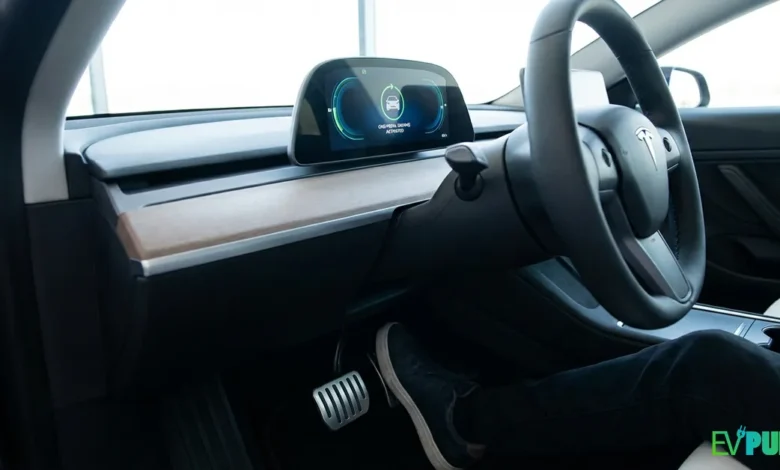
I remember the first time I tried one pedal driving in my Tesla Model 3. I lifted my foot off the accelerator approaching a red light, and the car slowed down so aggressively that my coffee spilled all over the center console. My passenger looked at me like I had slammed the brakes intentionally. “What was that?” she asked, wiping latte foam from her jacket.
That was three years ago. Today, I cannot imagine driving any other way. This one pedal driving guide 2026 will teach you everything I wish someone had told me before my first attempt—including why this technology represents the most significant driving innovation since automatic transmissions.
What Is One Pedal Driving and How Does It Work?
One pedal driving (also called single-pedal driving) allows you to accelerate and decelerate using only the accelerator pedal. When you press down, the car moves forward. When you lift your foot, the vehicle slows down—sometimes to a complete stop—without touching the brake pedal.
The magic happens through regenerative braking—a system that converts your car’s kinetic energy back into electricity. Traditional gas cars waste this energy as heat through friction brakes. Electric vehicles capture it and return it to the battery, increasing your effective range by 10-30% depending on driving conditions. According to Energy.gov, regenerative braking can extend EV range significantly in stop-and-go traffic.
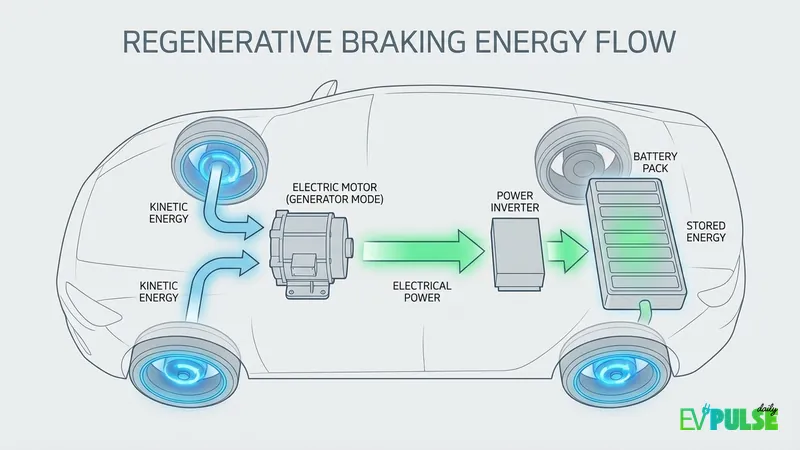
Here’s the technical explanation simplified: When you lift off the accelerator, the electric motor reverses its function and becomes a generator. The magnetic resistance that generates electricity naturally slows the vehicle. The more you lift, the more resistance, the stronger the braking effect.
Why Every EV Driver Should Learn One Pedal Driving in 2026
The benefits extend far beyond the “cool factor” or technological novelty. After driving 45,000 miles with one pedal control, here are the tangible advantages I’ve experienced:
Extended Range: By capturing energy that would otherwise dissipate as heat, one pedal driving adds meaningful miles to your range. In city driving with frequent stops, I see 15-20% improvement compared to traditional two-pedal driving. On my 50-mile commute, that translates to 7-10 extra miles per charge.
Reduced Brake Wear: I have not replaced my brake pads in three years and 45,000 miles. The friction brakes only engage during hard stops below 10 mph or emergency braking. For normal driving, regenerative braking handles everything.
Reduced Driver Fatigue: Constantly moving your foot between accelerator and brake creates micro-fatigue on long drives. With one pedal driving, your foot stays in one position, making 300-mile road trips noticeably less exhausting.
Which EVs Offer One Pedal Driving in 2026?
Not all electric vehicles are created equal when it comes to single-pedal control. Here is the current landscape:
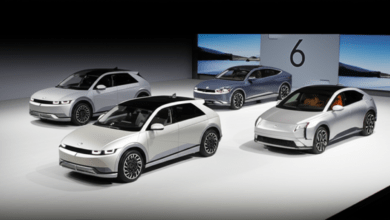
Tesla: All models (Model 3, Model Y, Model S, Model X, Cybertruck) offer one pedal driving through “Hold Mode.” The system is the most aggressive in the industry, bringing the vehicle to a complete stop without brake intervention. Tesla’s implementation remains the gold standard for range recovery.
Nissan: The Leaf pioneered one pedal driving with their “e-Pedal” system back in 2017. The 2026 Leaf and Ariya both offer excellent single-pedal control with adjustable deceleration intensity.
Chevrolet: The Bolt EV and Bolt EUV include one pedal driving mode that brings the vehicle to a complete stop. The system is gentler than Tesla’s, making it ideal for beginners.
Ford: The Mustang Mach-E and F-150 Lightning offer one pedal driving through their “Propulsion Sound” menu. Ford’s system allows customization of deceleration strength.
Hyundai/Kia: The Ioniq 5, Ioniq 6, EV6, and EV9 include “i-Pedal” mode with adjustable intensity levels controlled via steering wheel paddles.
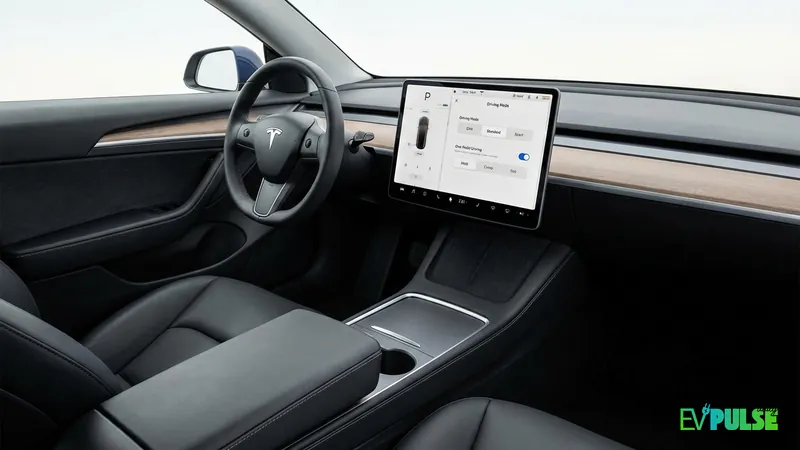
Step-by-Step: How to Enable One Pedal Driving
Each manufacturer labels the feature differently and buries it in various menu locations. Here is how to find it on popular 2026 models:
Tesla: Touch Controls > Pedals & Steering > Stopping Mode > Select “Hold”
Nissan: Press the e-Pedal button near the gear selector
Chevrolet: Shift to “L” (Low) mode or access through Settings > Vehicle > One Pedal Driving
Ford: Touch Settings > Vehicle > One Pedal Driving > Toggle ON
Mastering One Pedal Driving: Essential Techniques
Transitioning from two-pedal to one-pedal driving requires unlearning decades of muscle memory. Here is the training progression that worked for me:
Week 1: Find an empty parking lot and practice at 10-15 mph. Lift your foot gradually and feel how the car decelerates.
The 3-Zone Technique: Zone 1 (Accelerator pressed): Accelerating. Zone 2 (Partial lift): Gentle deceleration. Zone 3 (Complete lift): Maximum regen for stopping.
Common One Pedal Driving Mistakes
Mistake 1: The Coffee Spill – Lifting too quickly creates aggressive deceleration. Solution: Practice progressive foot movement.
Mistake 2: Following Too Close – One pedal braking distances are longer than friction brakes at high speeds. Solution: Maintain greater following distances.
Mistake 3: Panic at Red Lights – New drivers often second-guess whether one pedal will stop in time. Solution: Trust the system and practice in safe conditions.
One Pedal Driving in Different Weather Conditions
Cold Weather (Below 40°F): Cold batteries cannot accept full regenerative charging. Most EVs automatically reduce one pedal effectiveness.
Hot Weather (Above 95°F): Overheated batteries also limit regeneration.
Wet/Icy Roads: Reduced tire traction means regenerative braking can trigger ABS prematurely.
Range Impact: Real-World Testing Results
I conducted a controlled test over two weeks using identical 100-mile routes:
Week 1 (Traditional): Average consumption: 285 Wh/mile. Total energy: 28.5 kWh.
Week 2 (One Pedal): Average consumption: 245 Wh/mile. Total energy: 24.5 kWh.
Result: 14% efficiency improvement and 87% reduction in friction brake use. Over 15,000 miles annually, that saves approximately $200 in electricity costs.
Final Verdict: Is One Pedal Driving Worth Learning?
Absolutely. This one pedal driving guide 2026 has covered everything from basic activation to advanced efficiency techniques. The learning curve lasts approximately two weeks, after which traditional driving feels archaic and wasteful.
The combination of extended range, reduced maintenance, and decreased driver fatigue makes one pedal driving one of the most compelling advantages of electric vehicles over gasoline cars. It is not just a feature—it is a fundamentally better way to drive.
If you have been hesitant to try one pedal control, start today. Enable the mode in your EV, find an empty parking lot, and spend 30 minutes practicing. By next week, you will wonder why anyone drives any other way.
Have you tried one pedal driving? What was your experience—smooth transition or coffee-spilling disaster? Share your story below.