
The resurrection of Hummer as an all-electric supertruck represents one of the most dramatic transformations in automotive history. The hummer ev shatters expectations with 1,000 horsepower, 11,500 lb-ft of torque, and capabilities that make traditional off-roaders seem obsolete. As 2026 models arrive at dealerships, this is not merely an electric adaptation of a military icon—it is a complete reimagining of what extreme performance means in the zero-emission era.
Nobody expected the hummer ev to become the flagship of GM electric revolution. Yet here we are, watching a vehicle that weighs over 9,000 pounds sprint from 0-60 mph in just 3.0 seconds—faster than most sports cars. This comprehensive review examines eight shocking facts about the Hummer EV that redefine electric vehicle capabilities and challenge everything you thought you knew about off-road dominance.
Shocking Fact #1: 1000 Horsepower From Silence
The hummer ev Edition 1 delivers exactly 1,000 horsepower through three electric motors—one powering the front axle and two driving the rear wheels independently. This is not marketing exaggeration; it is measurable, repeatable performance that transforms a military-derived icon into a legitimate supercar killer.
Traditional Hummer H1 models produced 190 horsepower from their 6.5-liter diesel engines. The electric successor generates over five times that output while producing zero emissions. The Watts to Freedom launch mode unlocks maximum acceleration, pinning occupants to their seats with force that rivals dedicated drag racing vehicles.
What makes this power delivery shocking is not the number—it is the character. Hummer ev acceleration arrives instantaneously, without the build-up of combustion engines. There is no turbo lag, no transmission hunting for gears, just immediate, relentless thrust from any speed. The sensation violates everything truck enthusiasts thought they knew about heavy-duty performance.
Shocking Fact #2: CrabWalk Mode Defies Physics
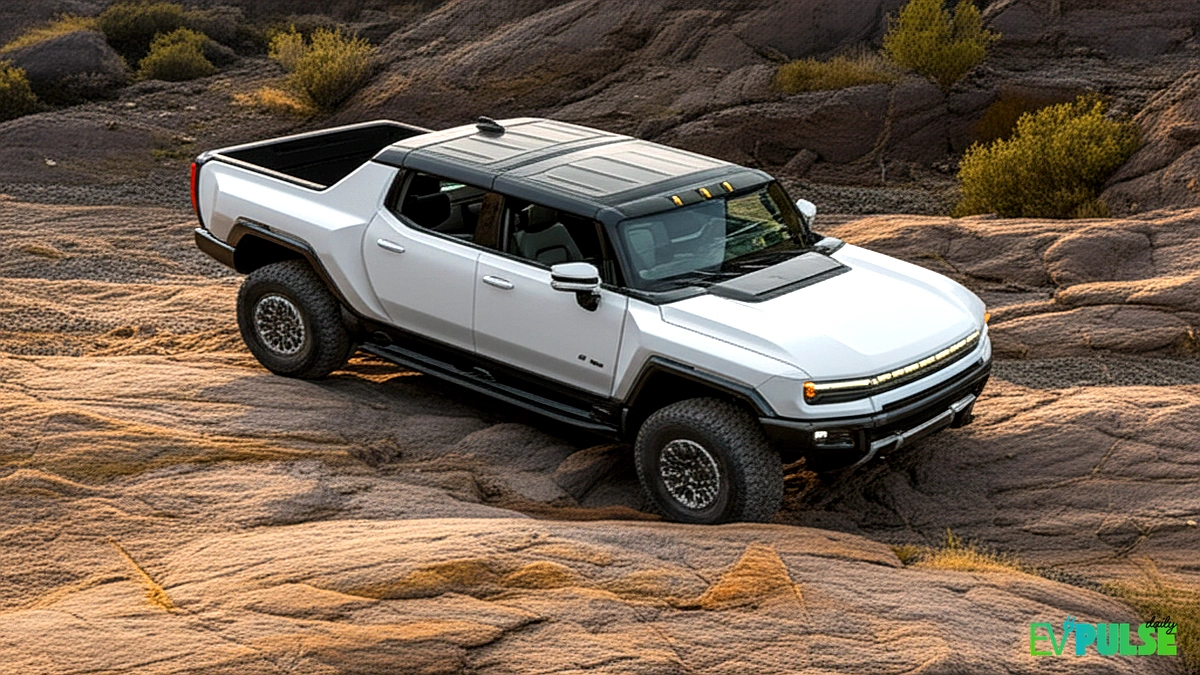
Perhaps no hummer ev feature generates more viral video content than CrabWalk mode. By steering the front and rear wheels in the same direction at low speeds, this 9,000-pound truck can move diagonally—like a crab scuttling across sand.
The engineering behind CrabWalk demonstrates GM serious approach to electric vehicle innovation. Rear-wheel steering is not new; Porsche and Mercedes have offered it for years. However, applying it to enable true diagonal movement required completely rethinking suspension geometry and control systems. The hummer ev rear wheels can turn up to 10 degrees, coordinated precisely with front steering angle.
Off-road applications prove genuinely transformative. Navigating narrow desert trails no longer requires three-point turns. Traversing rocky inclines becomes more controlled when the vehicle can angle itself precisely. Even urban parking—historically challenging for vehicles of this size—suddenly becomes manageable when you can slide diagonally into tight spaces.
Shocking Fact #3: 350-Mile Range Despite the Weight
Range anxiety haunts most electric vehicle discussions, yet the hummer ev largely dismisses these concerns despite its massive proportions. EPA ratings confirm 329 miles of range for Edition 1 models, with 2026 EPA updates extending this to 350 miles for properly equipped variants.
Consider what GM achieved here. This vehicle weighs 9,063 pounds—more than double the weight of a typical electric sedan. It features massive off-road tires that create substantial rolling resistance. Its aerodynamic profile resembles a brick more than a teardrop. Yet it travels farther on a single charge than many smaller, lighter EVs.
The secret lies in the 212.7 kWh battery pack—the largest ever fitted to a passenger vehicle. This enormous capacity, combined with sophisticated thermal management and regenerative braking systems, enables genuine long-distance capability. DC fast charging at 350 kW adds approximately 100 miles of range in just 10 minutes, making road trips genuinely practical.
For comparison, the Ford F-150 Lightning offers 320 miles of range with its extended battery. The hummer ev surpasses this despite weighing nearly 2,000 pounds more, demonstrating GM battery technology advantages.
Shocking Fact #4: Extract Mode Conquers Water
The hummer ev does not merely handle off-road terrain—it dominates elements that stop conventional vehicles entirely. Extract mode raises the suspension by six inches, enabling water fording up to 32 inches deep. That is deeper than most dedicated off-roaders and unprecedented for an electric vehicle.
Traditional wisdom suggested electric vehicles should avoid water entirely. High-voltage systems and submersion seemed incompatible by definition. GM engineers clearly disagreed, encasing battery packs in protective armor and sealing every electrical connection to military-grade specifications.
This capability transforms what is possible in electric adventure vehicles. River crossings that require conventional trucks to find alternate routes become non-events. Flash flood scenarios that strand other vehicles barely register as obstacles. The hummer ev does not apologize for being electric; it leverages electric architecture advantages to exceed combustion capabilities.
Shocking Fact #5: The $110,000 Price Tag Makes Sense
Sticker shock remains the most common reaction to hummer ev pricing. Edition 1 models commanded $110,295, and even 2026 EV3X variants start around $99,000. For a brand historically associated with excess and inefficiency, this pricing seems almost reasonable when examined closely.
Consider the engineering investment. Three electric motors producing 1,000 horsepower. A 212.7 kWh battery pack—larger than ten Tesla Model 3 battery packs combined. CrabWalk steering, Extract mode suspension, and military-grade water sealing. The hummer ev represents genuine technological advancement, not badge engineering.
Comparisons with Rivian R1T and Ford F-150 Lightning prove instructive. The Rivian offers impressive capability at $75,000 but cannot match Hummer power output. The Lightning provides practicality at $62,000 but lacks the extreme off-road focus. The Hummer occupies a unique position as the ultimate expression of electric truck excess—unapologetic, excessive, and extraordinary.
Shocking Fact #6: Interior Luxury Rivals Cadillac
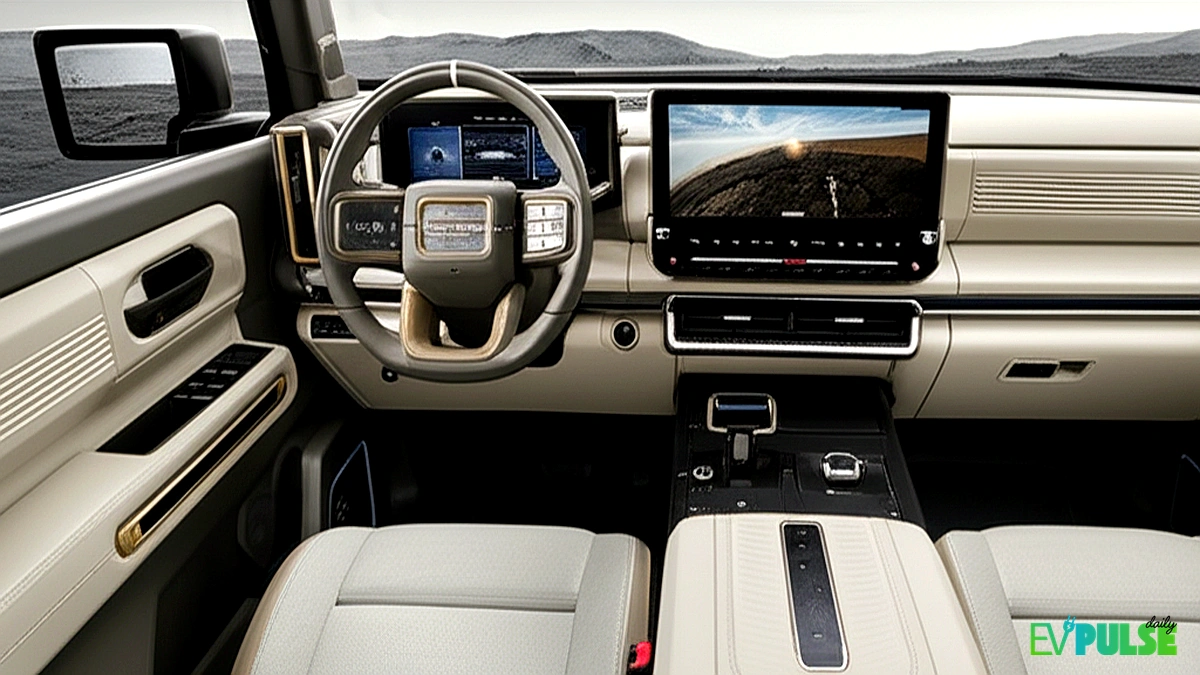
Nobody expected luxury from a vehicle wearing the Hummer badge. Military trucks prioritized function over comfort; early civilian Hummers maintained that utilitarian ethos. The hummer ev completely abandons this approach, offering an interior that would feel appropriate in a Cadillac Escalade.
The 13.4-inch central touchscreen dominates the dashboard, running GM latest infotainment system with wireless Apple CarPlay and Android Auto. A 12.3-inch digital instrument cluster provides configurable displays showing everything from battery status to off-road telemetry. Physical controls for climate and volume acknowledge that off-roading requires tactile feedback, not just touchscreen gestures.
Materials throughout surprise with their quality. Genuine leather covers the seats, with Hummer logos embossed into the headrests. Open-pore wood trim—yes, in a Hummer—adds warmth unexpected in this segment. The infinity roof, consisting of removable transparent panels, creates an open-air experience that connects occupants with surrounding terrain in ways conventional sunroofs cannot match.
Technology extends beyond entertainment. The hummer ev includes GM Super Cruise hands-free driving system on compatible highways, enabling true autonomous travel on over 400,000 miles of mapped roads. Off-road, the system provides trail mapping and obstacle detection that enhances driver confidence in challenging terrain.
Shocking Fact #7: Real-World Efficiency Defies Expectations
Electric vehicle efficiency is typically measured in miles per kilowatt-hour (kWh). The hummer ev achieves approximately 1.5 miles per kWh—numbers that seem disappointing until you consider the physics involved.
Moving 9,000 pounds requires substantial energy regardless of powertrain. The Kia EV9, a three-row electric SUV weighing 5,800 pounds, achieves roughly 2.5 miles per kWh. The Hummer efficiency, while lower, represents remarkable engineering given its mass and off-road capability focus.
Real-world ownership costs still favor the electric Hummer over its combustion predecessors. A traditional Hummer H2 achieved approximately 10 miles per gallon—equivalent to roughly $0.40 per mile at current fuel prices. The hummer ev costs approximately $0.08 per mile when charged at home, representing 80% savings despite its excess.
Shocking Fact #8: Production Scaling Makes It Accessible
The hummer ev Edition 1 production run of 10,000 units sold out within hours of announcement, suggesting this was destined to remain a rare collector item. GM had other plans, rapidly scaling Factory Zero in Detroit to meet unprecedented demand.
2026 model year production targets exceed 50,000 units annually—a massive increase that transforms the Hummer from exclusive toy to genuinely available product. EV3X and EV2X variants provide lower price points while maintaining core capabilities, broadening accessibility without compromising the brand extreme positioning.
This scaling demonstrates GM commitment to electric transformation. The Ultium battery platform underlying the Hummer will power numerous additional models across Cadillac, Chevrolet, and GMC lineups. Lessons learned from Hummer production inform every subsequent electric vehicle from the company, accelerating the entire industry transition.
Key Takeaways
The hummer ev represents more than an electric adaptation of a military icon—it demonstrates what is possible when engineers abandon preconceptions about vehicle categories. Eight shocking facts emerge from this analysis: 1,000 horsepower delivered silently, CrabWalk mode defying conventional maneuverability, 350-mile range despite massive weight, 32-inch water fording capability, pricing justified by engineering substance, luxury interiors unexpected from this brand, real-world efficiency that still saves owners money, and production scaling that makes extreme capability genuinely accessible.
For potential buyers, the hummer ev demands consideration if maximum capability ranks above all other priorities. This is not a practical daily driver for most households; it is a statement of technological dominance and off-road readiness. Competition from Rivian, Ford, and Tesla offers compelling alternatives at lower prices, but none match the Hummer extreme positioning.
For the industry, the Hummer EV proves that electrification enhances rather than compromises capability. The most extreme, excessive, unreasonable vehicle in GM portfolio now runs on electrons rather than hydrocarbons—and performs better as a result. That transformation signals the inevitability of electric dominance across every vehicle segment, from economy commuters to off-road supertrucks.