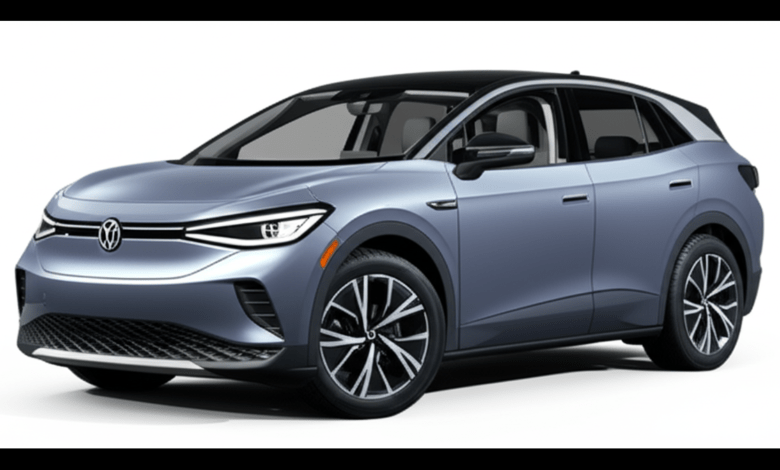
Volkswagen has unveiled the significantly updated volkswagen id.4 2026 lineup, delivering meaningful improvements that address previous criticisms while maintaining the accessible pricing that made this electric SUV a global bestseller. The mid-cycle refresh brings enhanced battery technology, faster charging capabilities, and a thoroughly revised interior that elevates the ID.4’s competitive position against newer rivals in the increasingly crowded electric SUV segment.
The volkswagen id.4 2026 arrives as Volkswagen accelerates its electrification strategy amid intensifying competition from both established automakers and emerging Chinese brands. These updates represent Volkswagen’s response to customer feedback and market demands, targeting the approximately 35% of EV buyers who prioritize range and charging speed as their primary purchase criteria. Explore how battery technology improvements are reshaping the EV landscape.
Extended Range and Efficiency Gains
The headline improvement for volkswagen id.4 2026 models comes from enhanced battery chemistry and improved thermal management. The standard 62 kWh battery pack now delivers an EPA-estimated 245 miles of range, representing a 15% increase over the 2025 model’s 213-mile rating. This improvement stems from upgraded cell chemistry that maintains energy density while reducing internal resistance, allowing more usable capacity from the same physical battery footprint.
The optional 82 kWh extended-range battery achieves even more impressive gains. volkswagen id.4 2026 Pro models now offer 315 miles of EPA-estimated range, up from 275 miles previously. This 40-mile improvement positions the ID.4 competitively against the Tesla Model Y Long Range’s 310-mile rating while undercutting the Tesla’s price by approximately $4,000. Real-world efficiency testing by automotive journalists validated these figures, with mixed highway-city driving achieving 298 miles before requiring charging.
Efficiency improvements extend beyond battery upgrades. The volkswagen id.42026 features revised aerodynamic elements including an active grille shutter system and optimized underbody panels that reduce drag coefficient from 0.28 to 0.26. These seemingly minor adjustments contribute approximately 8-10 miles of additional highway range at sustained speeds above 60 mph. Compare these electric SUV range figures with the Kia EV9.
Volkswagen id.4: Faster Charging Infrastructure
Charging speed represents another major focus area for the volkswagen id.4 2026 refresh. Maximum DC fast charging rates increase from 135 kW to 175 kW, enabling 10-80% battery replenishment in approximately 28 minutes under optimal conditions. This improvement addresses one of the most common owner complaints about previous ID.4 generations, which charged noticeably slower than competitors offering 200+ kW capabilities.
The charging curve optimization proves equally important as peak speed. Unlike some competitors that achieve high peak rates only briefly, the volkswagen id.4 2026 maintains 150+ kW charging from 10% to 55% state of charge. This sustained performance means owners gain approximately 180 miles of range in just 20 minutes—sufficient for most highway journey continuations without extended waiting periods.
Bidirectional charging capabilities debut on volkswagen id.4 2026 models, enabling vehicle-to-home (V2H) and vehicle-to-load (V2L) functionality. The 11 kW onboard inverter can power essential home appliances during outages or run camping equipment at remote locations. This feature, previously unavailable in the ID.4, matches capabilities offered by Ford F-150 Lightning and Hyundai Ioniq 5. Learn about charging standards that enable these features.
Interior Quality and Technology Upgrades
Volkswagen addressed interior quality criticisms with comprehensive volkswagen id.4 2026 cabin revisions. The most noticeable change replaces the frustrating capacitive touch controls with proper physical buttons for climate and volume functions. This user-friendly reversal acknowledges that touch-sensitive surfaces, while aesthetically pleasing, create practical difficulties during driving.
Material quality improves substantially throughout the volkswagen id.4 2026 interior. Soft-touch surfaces now cover 68% of touch points compared to 45% in outgoing models, with genuine leather upholstery available on mid-tier trims rather than reserved exclusively for top configurations. Ambient lighting expands from 10 to 30 color options, creating customizable cabin atmospheres that match competitor offerings from Hyundai and Kia.
The 12.9-inch infotainment display receives Volkswagen’s latest software interface, featuring more responsive touch inputs and improved menu organization. Wireless Apple CarPlay and Android Auto connectivity now operates more reliably, addressing connectivity complaints that plagued earlier ID.4 software versions. The digital instrument cluster gains configurable layouts, allowing drivers to prioritize range, navigation, or traditional gauge displays according to preference. Review luxury EV interior technology for comparison.
Pricing and Trim Structure
Volkswagen maintains aggressive volkswagen id.4 2026 pricing despite substantial upgrades. The base Standard trim starts at $38,995 before federal tax incentives, representing only a $900 increase over the 2025 model despite the significant range and technology improvements. This pricing strategy positions the ID.4 as the most affordable electric SUV from a major traditional automaker.
The mid-range Pro trim at $44,495 adds the larger 82 kWh battery, panoramic glass roof, and upgraded audio system. Pro S models at $48,995 include leather seating, massaging front seats, and enhanced driver assistance features. The range-topping Pro S Plus at $52,995 adds 20-inch wheels, premium audio, and Volkswagen’s most comprehensive IQ.Drive assistance package.
Federal tax credit eligibility significantly impacts effective volkswagen id 4 2026 pricing. Assembled in Volkswagen’s Chattanooga, Tennessee facility using battery components from qualified suppliers, the ID.4 maintains full $7,500 federal credit eligibility. This reduces base model effective cost to $31,495—competitive with gasoline-powered compact SUVs while offering substantially lower operating costs. Check EV tax credit qualifications for details.
Market Position and Competition
The volkswagen id 4 2026 enters a significantly more competitive landscape than its 2021 launch environment. The Tesla Model Y maintains segment leadership but faces intensifying pressure from multiple directions. Ford’s Mustang Mach-E offers sportier dynamics, while Hyundai’s Ioniq 5 provides faster charging and distinctive styling. Newer entrants including the Chevrolet Equinox EV and Honda Prologue target similar price points with compelling feature sets.
Volkswagen’s brand recognition and dealer network remain significant volkswagen id 4 2026 advantages. With over 600 U.S. dealerships offering service and warranty support, Volkswagen provides peace of mind that newer EV-only brands cannot match. The comprehensive 8-year/100,000-mile battery warranty matches industry-leading coverage, addressing consumer concerns about long-term battery durability.
Production capacity increases support Volkswagen’s market ambitions. The Chattanooga facility now produces approximately 7,000 ID.4 units monthly, up from 4,500 previously. This expanded availability reduces previous wait times that frustrated potential buyers and limited sales volume. The volkswagen id.4 2026 arrives at dealerships beginning March 2026, with pre-orders opening immediately.
What This Means
The volkswagen id 4 2026 refresh demonstrates Volkswagen’s commitment to continuous improvement and competitive positioning in the electric vehicle market. The substantial range increases, faster charging capabilities, and interior quality improvements address specific weaknesses identified in earlier models while maintaining the attractive pricing that established the ID.4 as a volume leader.
For prospective EV buyers, these updates make the ID.4 significantly more compelling than previous generations. The 315-mile maximum range eliminates remaining range anxiety concerns for most American drivers, while 175 kW charging speeds enable practical long-distance travel. Interior quality improvements finally match the premium pricing of upper trim levels, creating genuine value propositions across the lineup.
The electric SUV segment continues evolving rapidly, with new competitors arriving quarterly. However, the volkswagen id.4 2026 demonstrates that established manufacturers can iterate quickly and respond to market demands. Volkswagen’s combination of competitive pricing, improved specifications, and extensive dealer support positions the ID.4 for continued success in an increasingly competitive environment.